
Warning: Undefined array key "columns" in /home/dominic1/public_html/wp-content/plugins/simplest-gallery/lightbox.php on line 89
Warning: Undefined array key "columns" in /home/dominic1/public_html/wp-content/plugins/simplest-gallery/lightbox.php on line 89
Warning: Undefined array key "columns" in /home/dominic1/public_html/wp-content/plugins/simplest-gallery/lightbox.php on line 89
Warning: Undefined array key "columns" in /home/dominic1/public_html/wp-content/plugins/simplest-gallery/lightbox.php on line 89
Warning: Undefined array key "columns" in /home/dominic1/public_html/wp-content/plugins/simplest-gallery/lightbox.php on line 89
Warning: Undefined array key "columns" in /home/dominic1/public_html/wp-content/plugins/simplest-gallery/lightbox.php on line 89
Warning: Undefined array key "columns" in /home/dominic1/public_html/wp-content/plugins/simplest-gallery/lightbox.php on line 89
Warning: Undefined array key "columns" in /home/dominic1/public_html/wp-content/plugins/simplest-gallery/lightbox.php on line 89
Warning: Undefined array key "columns" in /home/dominic1/public_html/wp-content/plugins/simplest-gallery/lightbox.php on line 89
Warning: Undefined array key "columns" in /home/dominic1/public_html/wp-content/plugins/simplest-gallery/lightbox.php on line 89
Warning: Undefined array key "columns" in /home/dominic1/public_html/wp-content/plugins/simplest-gallery/lightbox.php on line 89
Warning: Undefined array key "columns" in /home/dominic1/public_html/wp-content/plugins/simplest-gallery/lightbox.php on line 89
Warning: Undefined array key "columns" in /home/dominic1/public_html/wp-content/plugins/simplest-gallery/lightbox.php on line 89
Warning: Undefined array key "columns" in /home/dominic1/public_html/wp-content/plugins/simplest-gallery/lightbox.php on line 89
Warning: Undefined array key "columns" in /home/dominic1/public_html/wp-content/plugins/simplest-gallery/lightbox.php on line 89
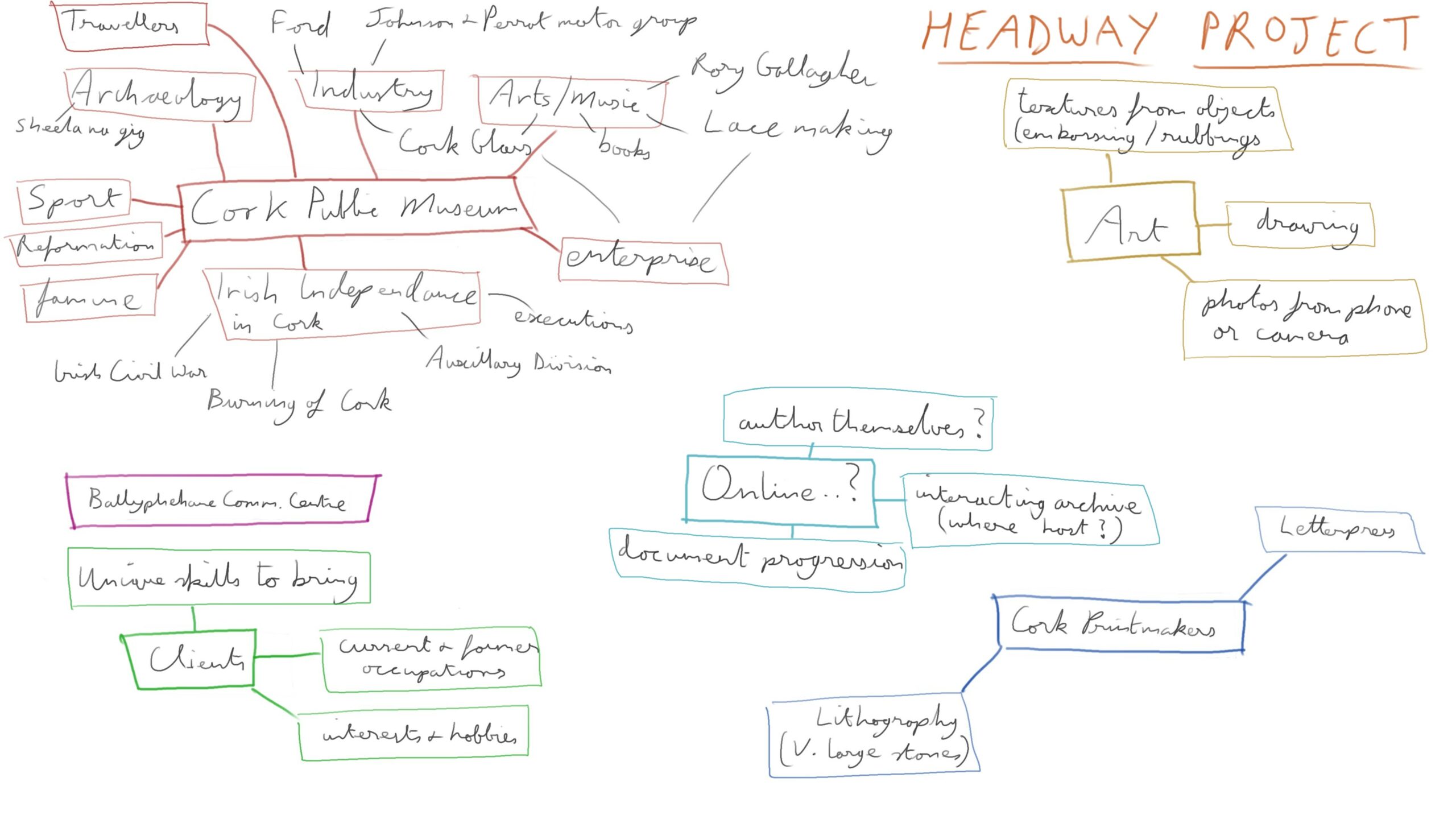
Cork Public Museum.
About a quarter of the sessions will take place in the Cork Public Museum, where it is hoped that the participating clients will be able to find some subjects of interest which might inspire memories and potentially artworks as the course goes on. The museum has been on the site in Fitzgerald’s Park in more or less its current form since 1945.
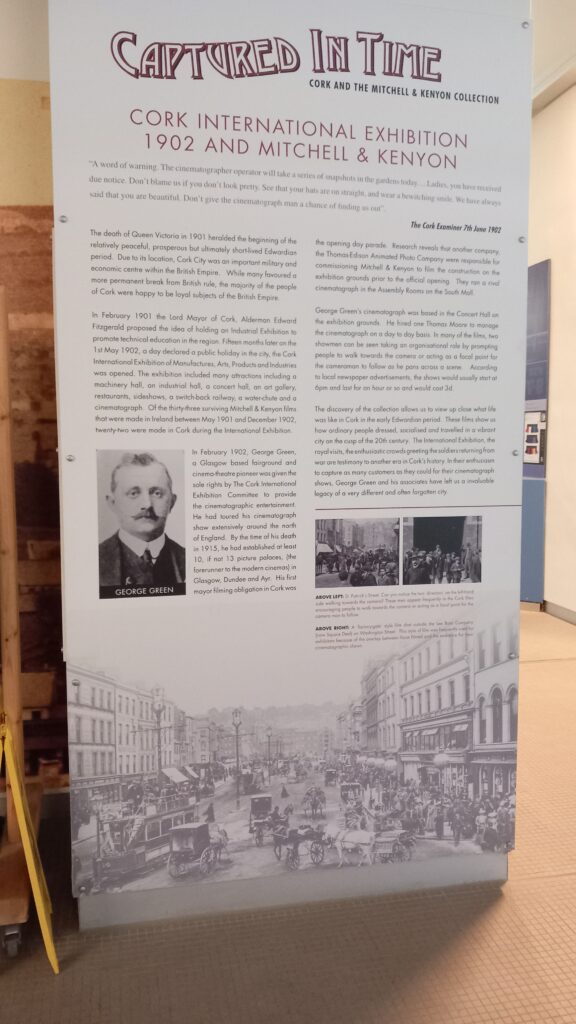
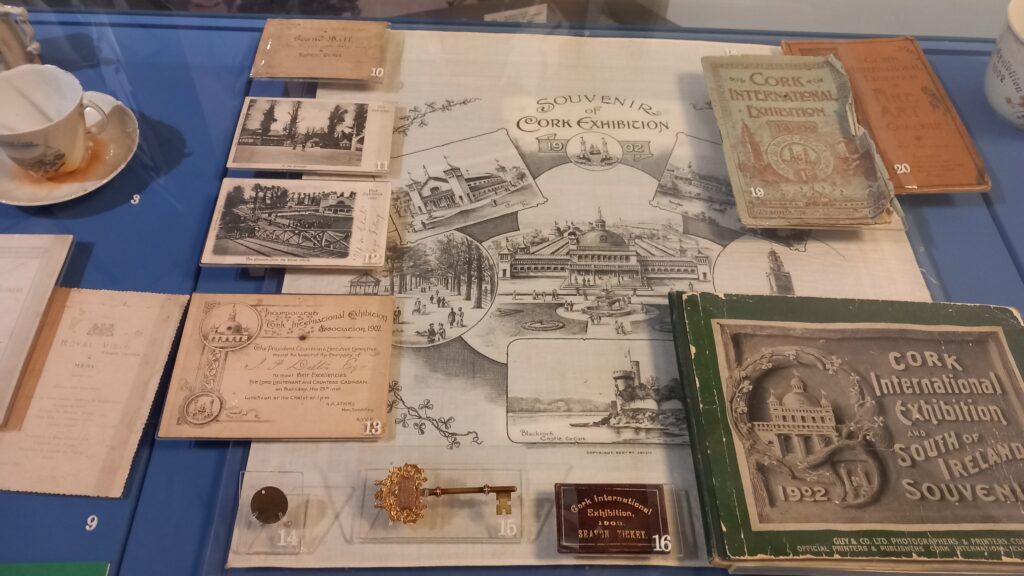
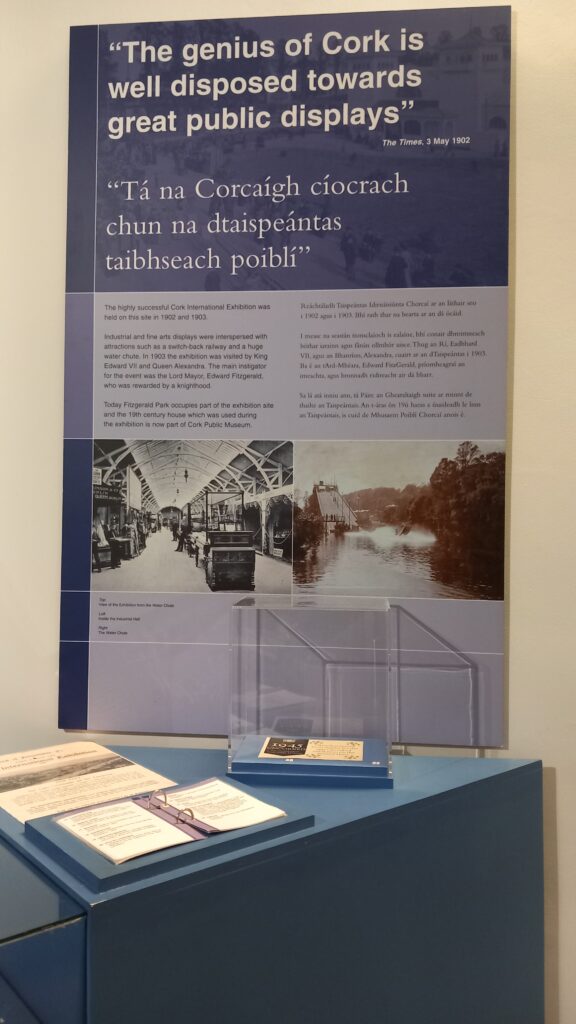
In 1902 and 1903 Cork hosted two international exhibitions near the current site of the museum, and there is a nice multimedia installation about these on the ground floor of the museum, including a touch screen menu connected to a projector which shows photos and video footage. Maybe the project could have something like that as an outcome?
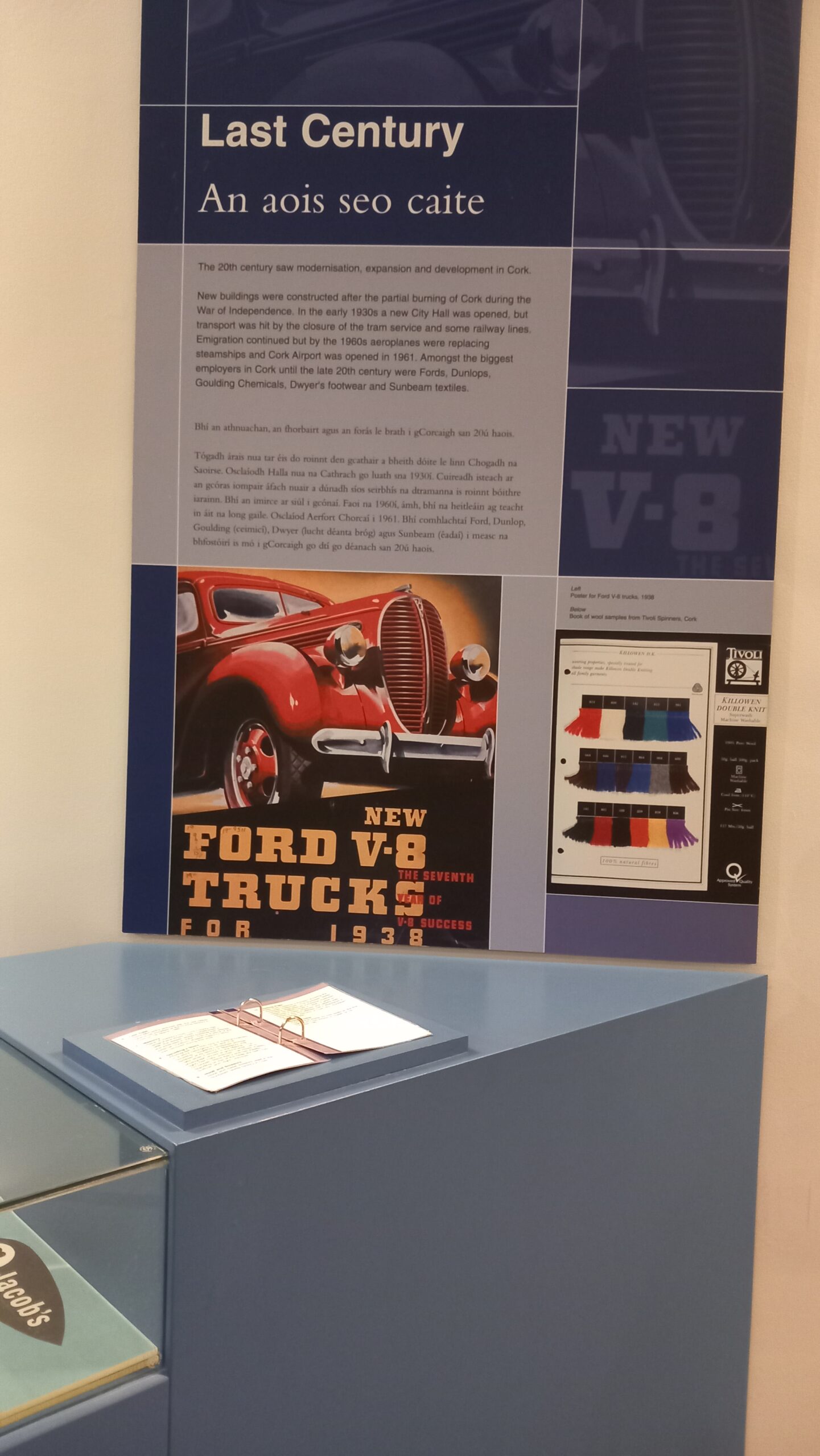
Also close to the entrance of the museum is a section which focuses on the 20th century industrial developments in Cork, in particular the important employers of the time such as Fords motor factory. I expect some clients may have family connections to these companies.
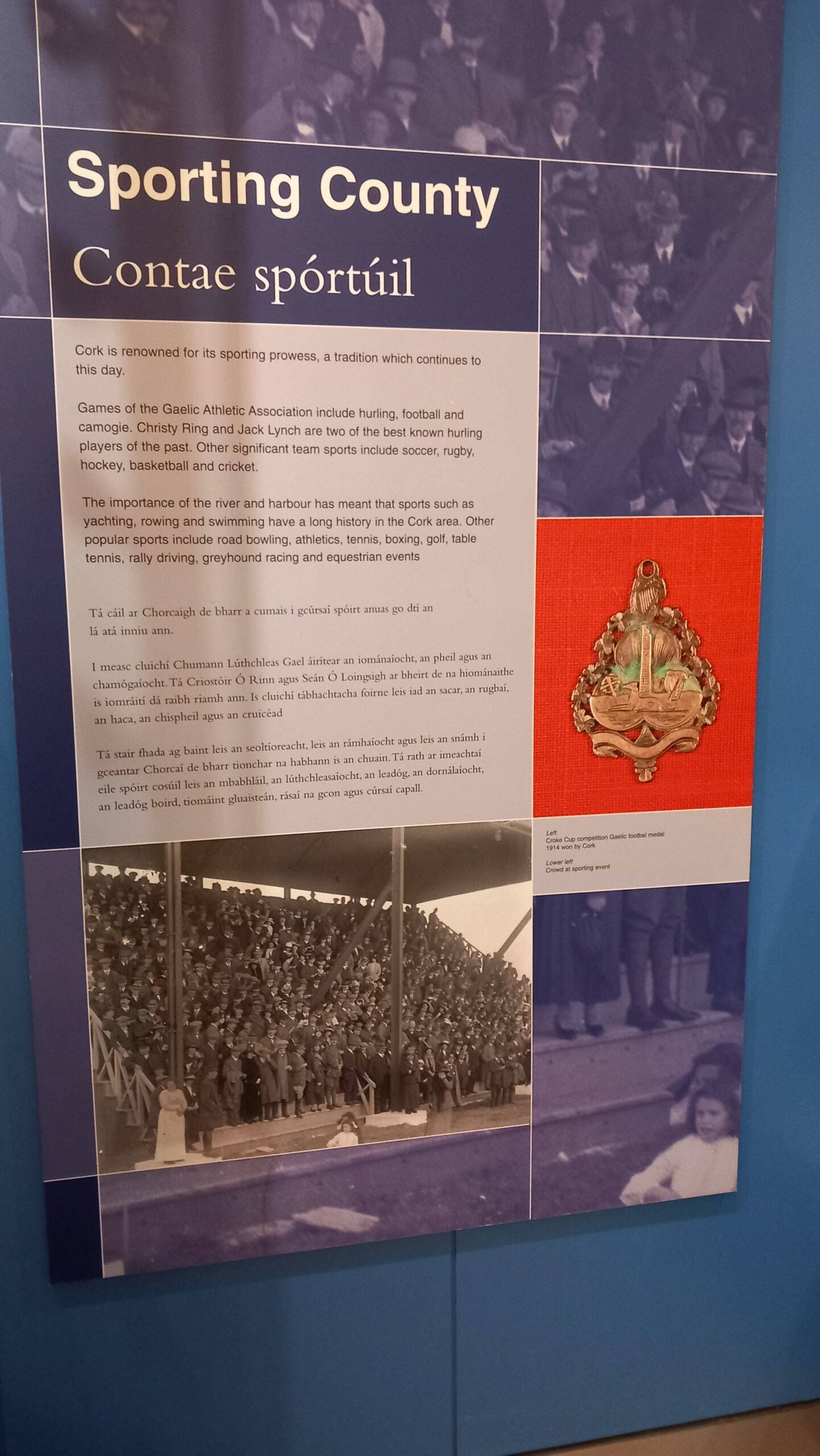
There is a section on the history of sport in Cork, with an emphasis on important figures such as the hurler Christy Ring and other GAA figures. River-based sport is also emphasised.
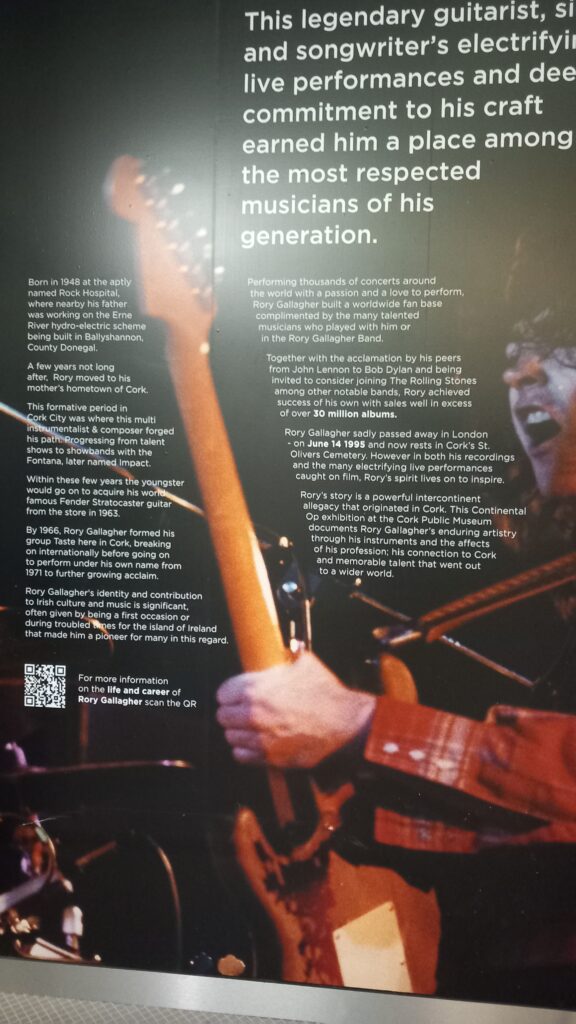
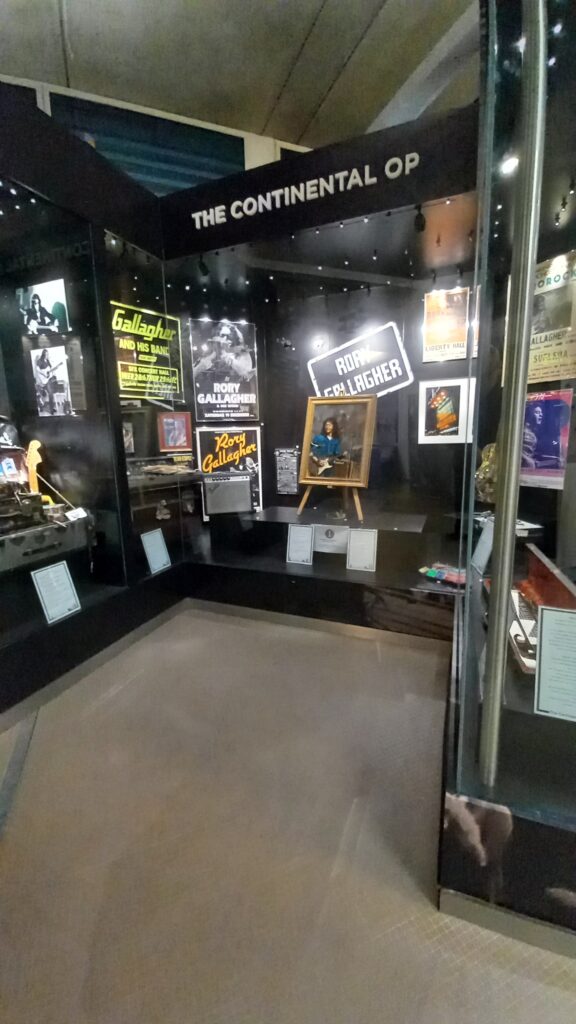
The exhibition continues with some important cultural and artistic figures, with a very impressive display based around Rory Gallagher’s career.
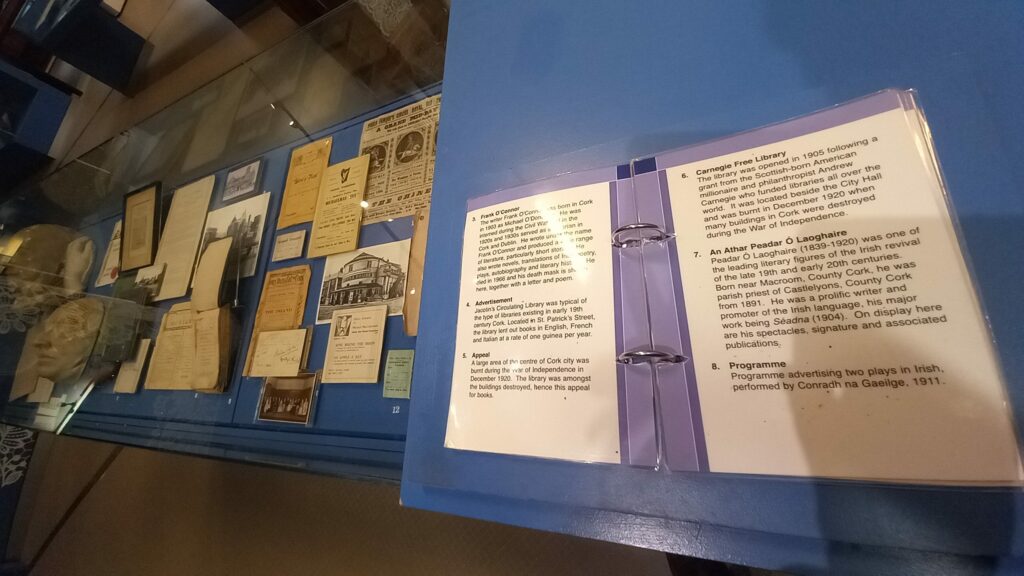
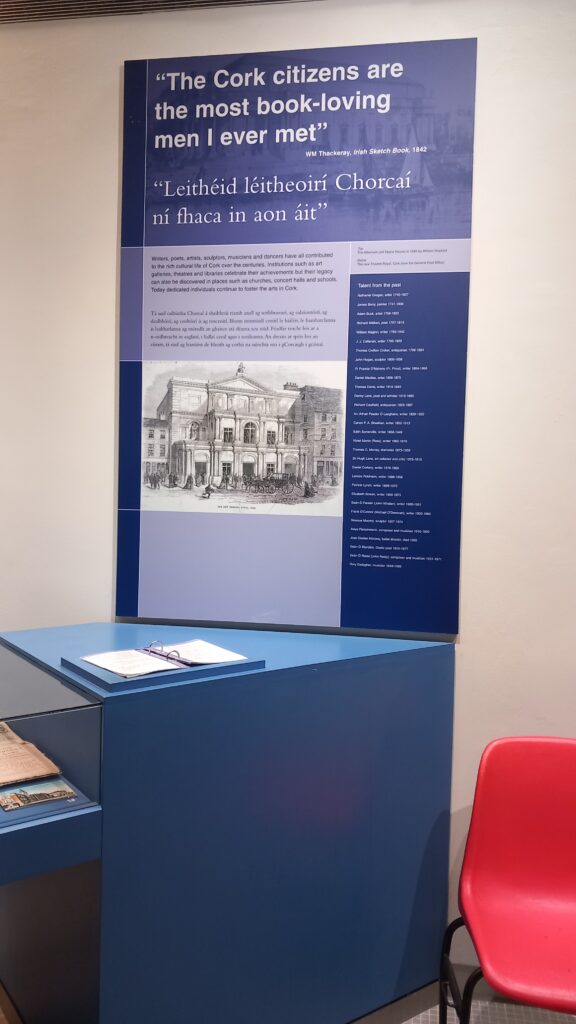
There is also a section showcasing the Cork tradition of writing, highlighting some prominent figures such as Peadar O’Laoghaire and the popular usage of libraries.
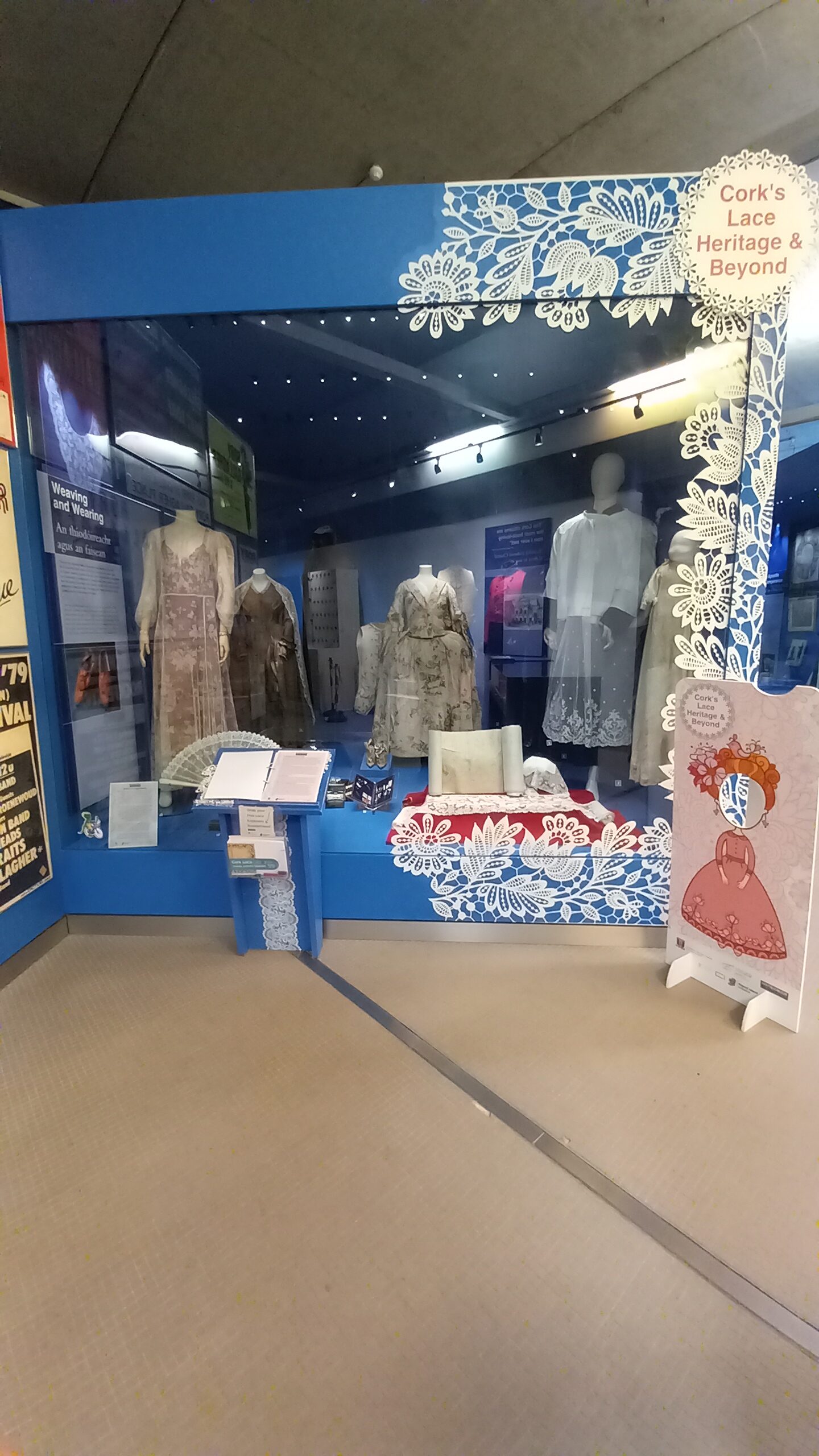
The tradition of cork lace gets a lovely display, featuring beautiful example of garments made with lace and some of the tools and materials used to produce them.
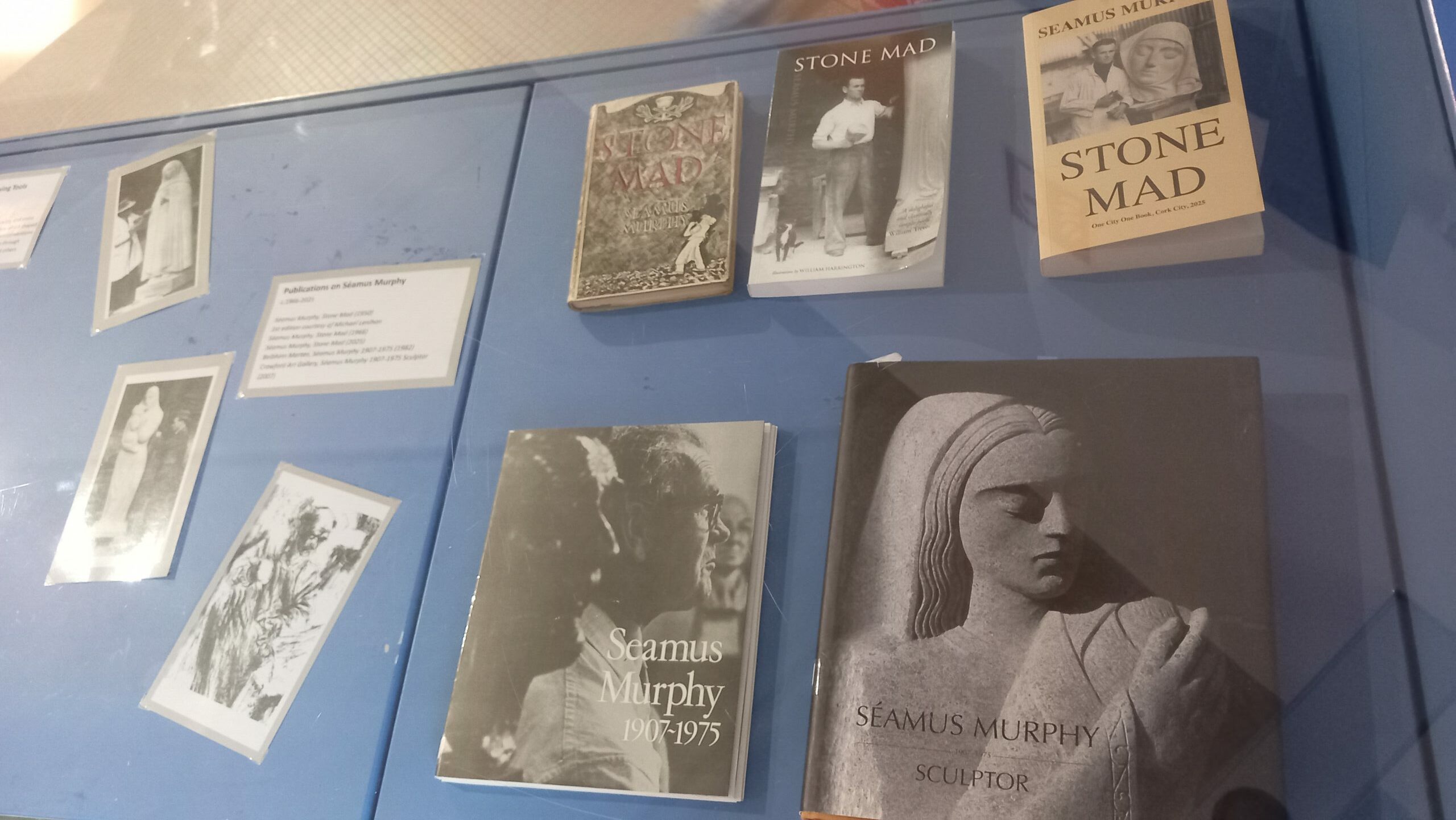
Also on the artistic side, the museum has some work from the 20th century Cork sculptor Seamus Murphy. Some of his stone carving work was recently relocated from Fitzgerald’s Park into the museum in order to better preserve it.
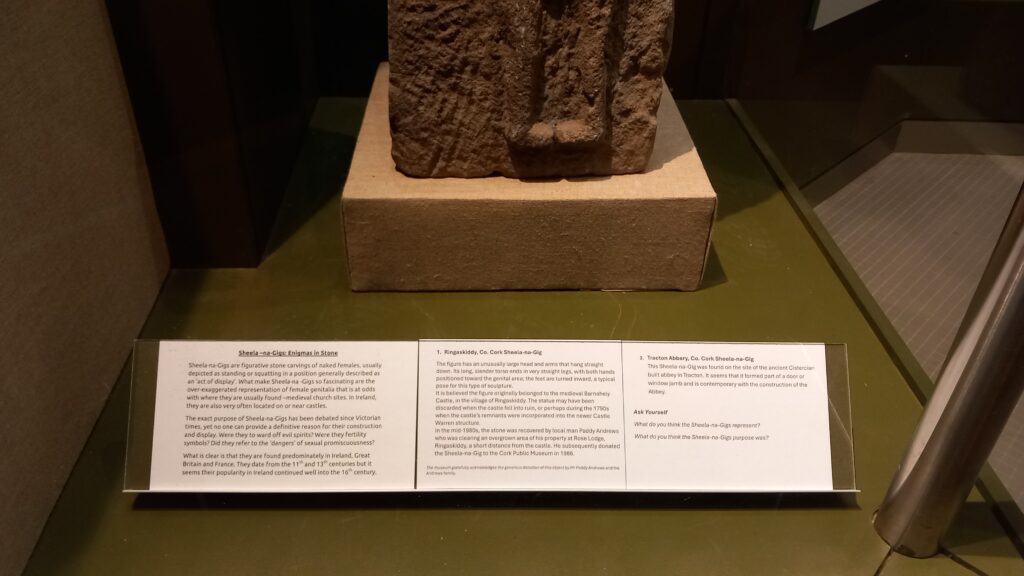
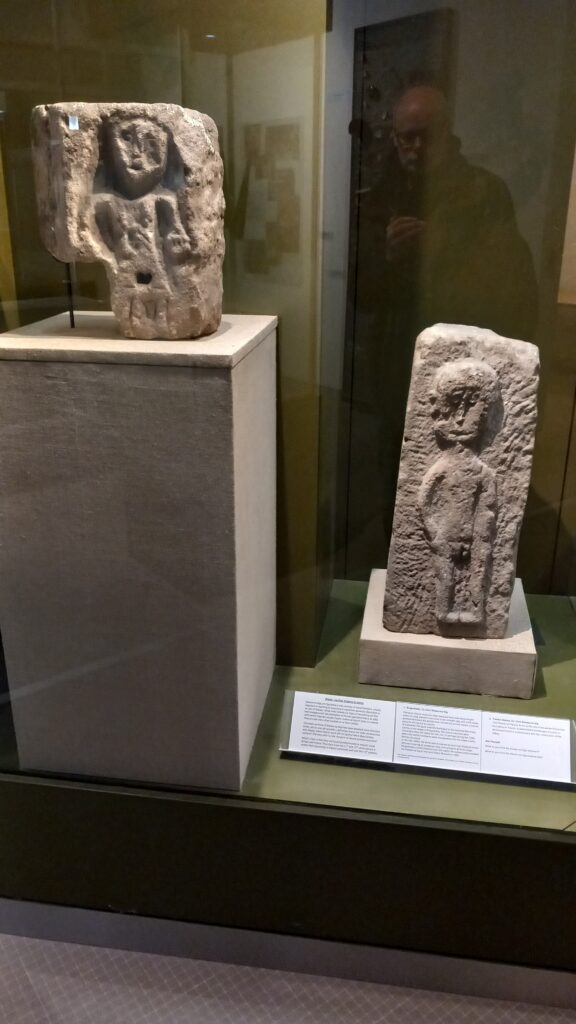
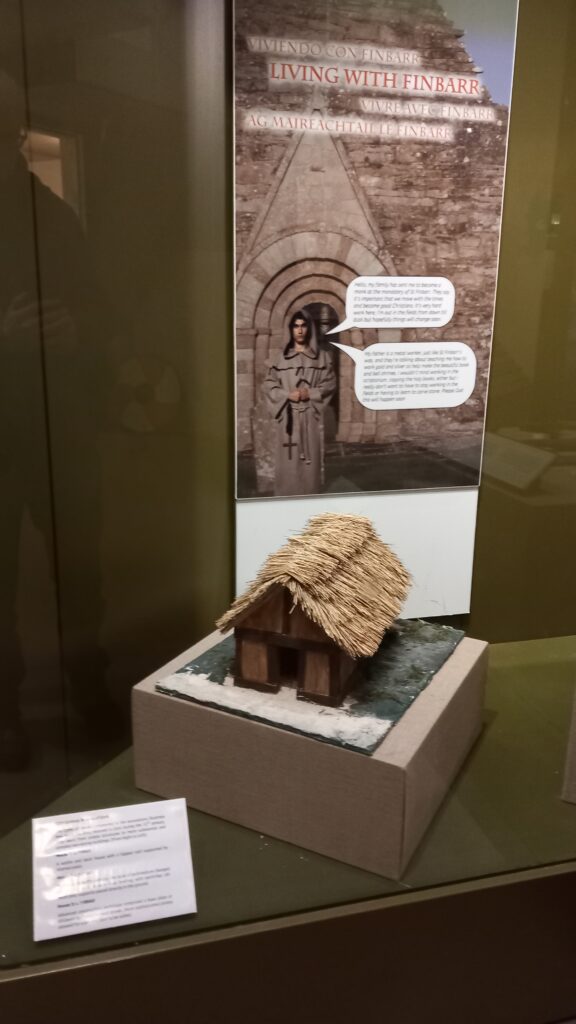
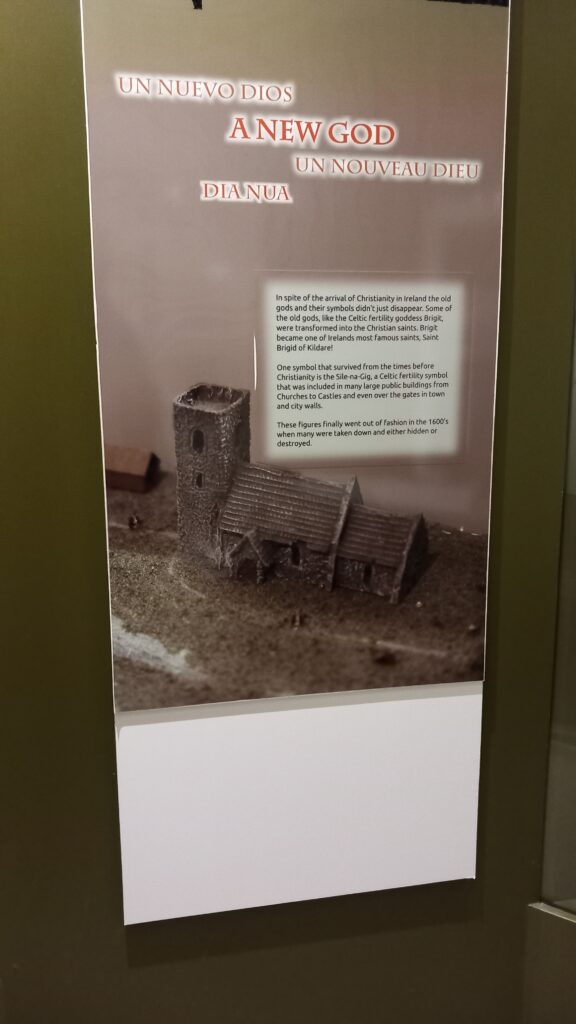
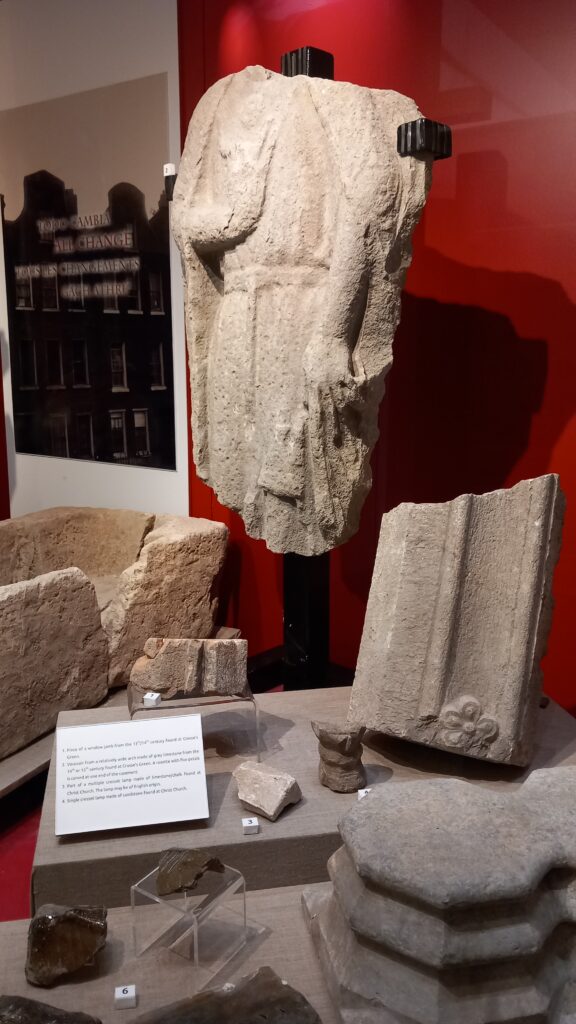
A large section of the ground floor of the museum is focused on the much earlier history of the Cork area with archaeological finds and it deals with artefacts such as the Celtic fertility symbol Sile-na-gig, and later into the arrival and influence of Christianity. There are some large displays with fragments of architecture and other artefacts from the period. To be able to get hold of some objects or similar ones and do some recording of them, or attempt to recreate them could be a good way to generate imagery for the project..? Things like lace could be great for embossing or rubbings, maybe even with lithography.
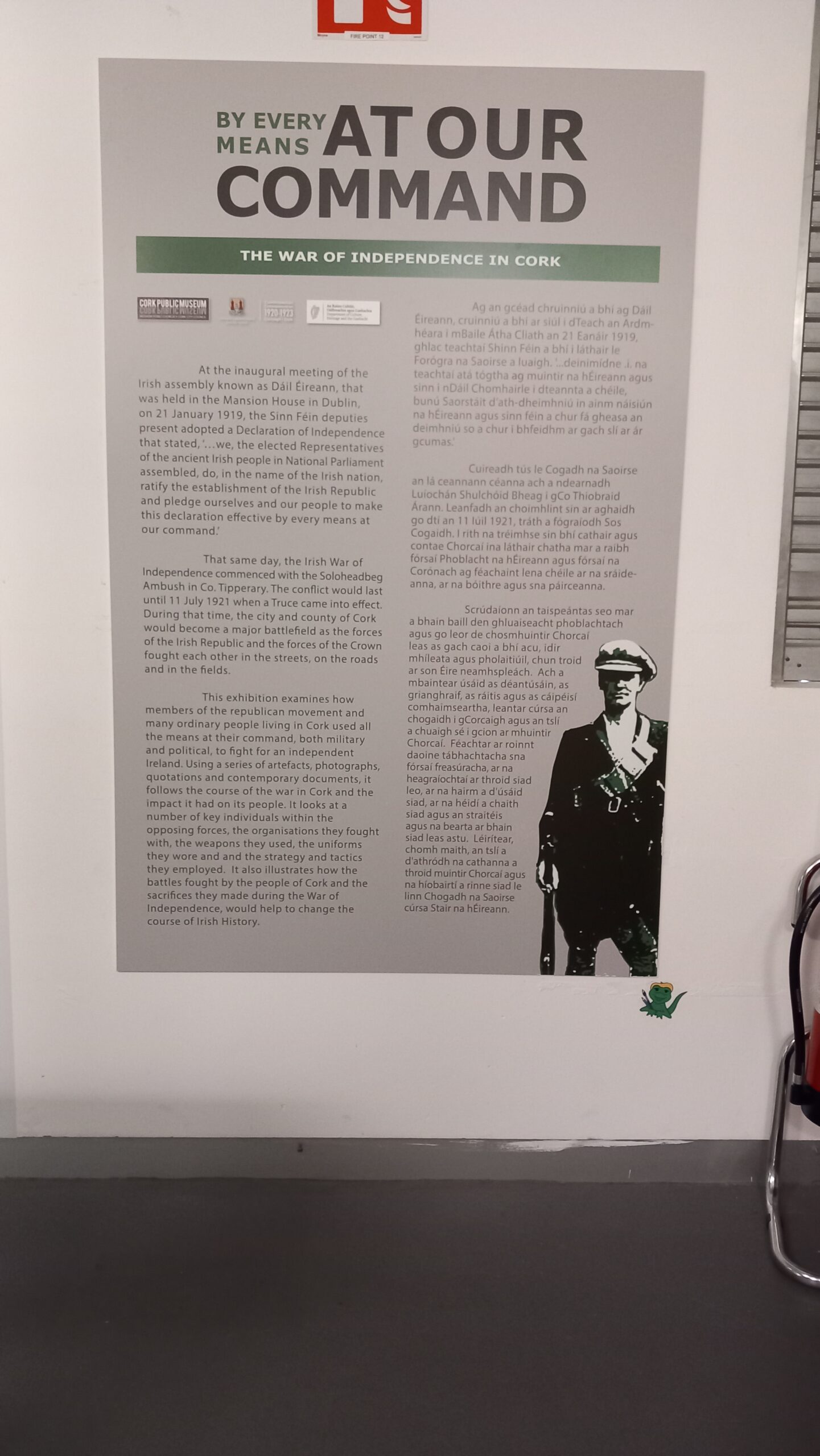
The upper floor of the museum is mostly taken over with a large exhibition covering the early 20th century in Ireland and the war of independence.
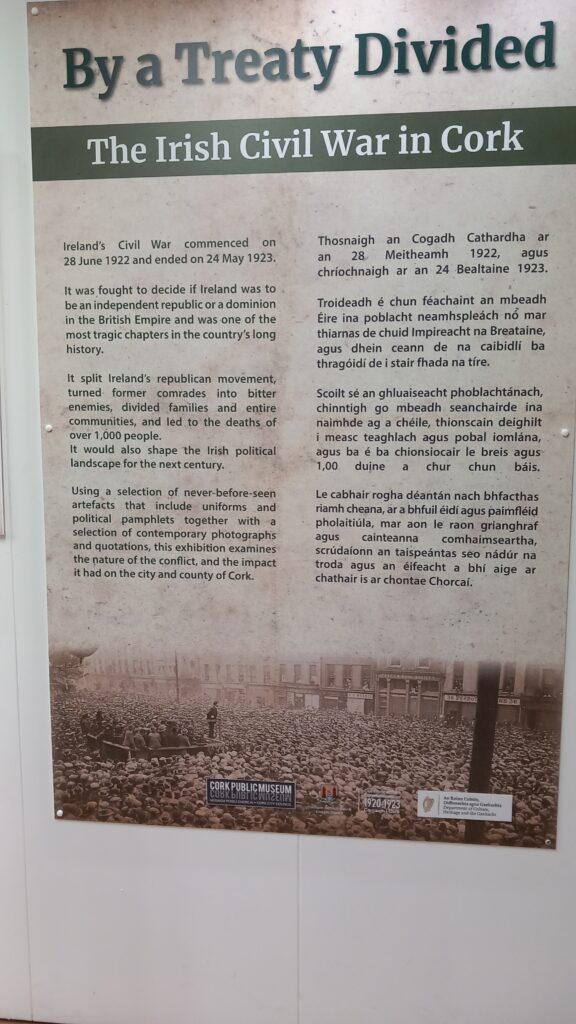
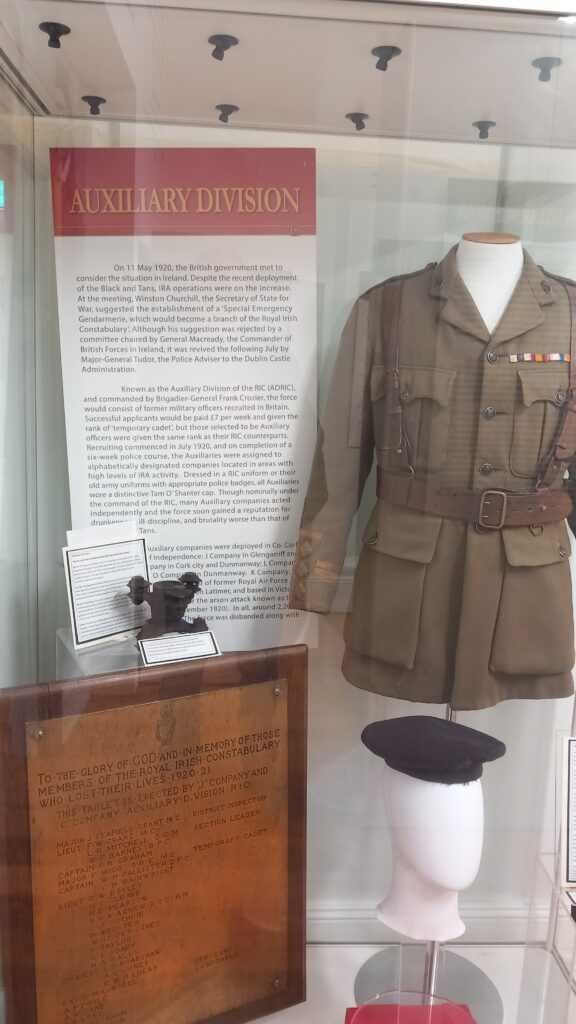
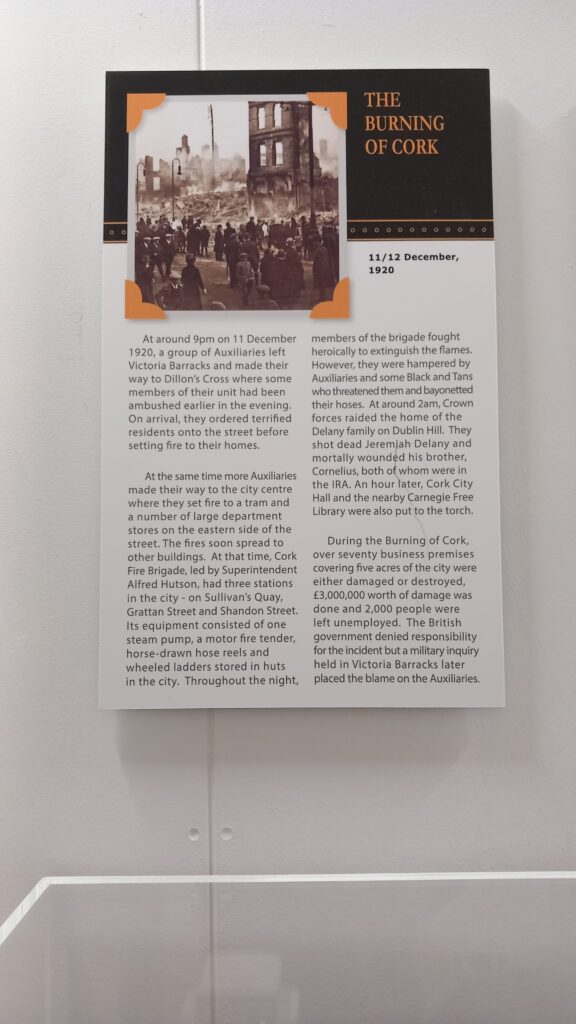
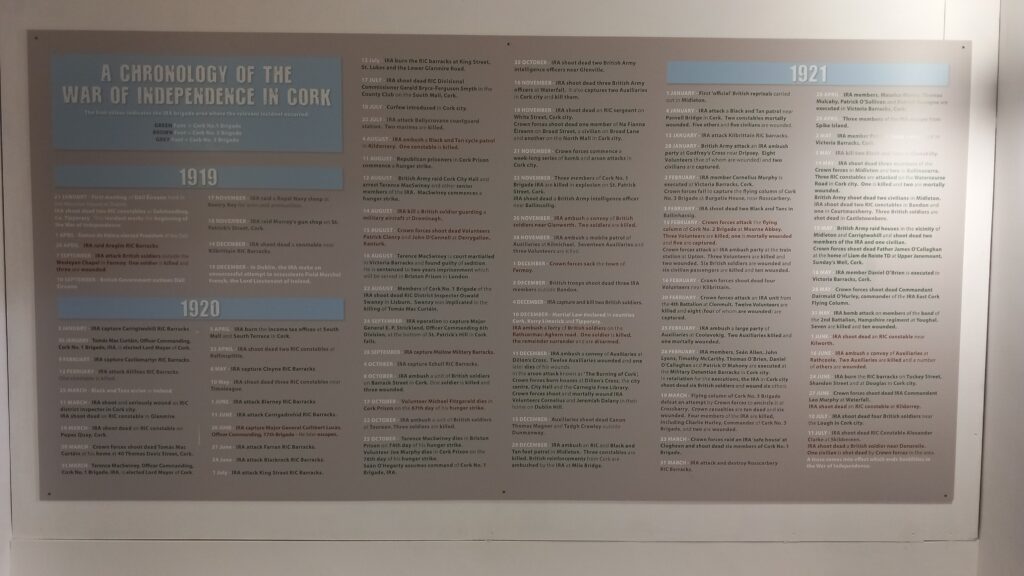
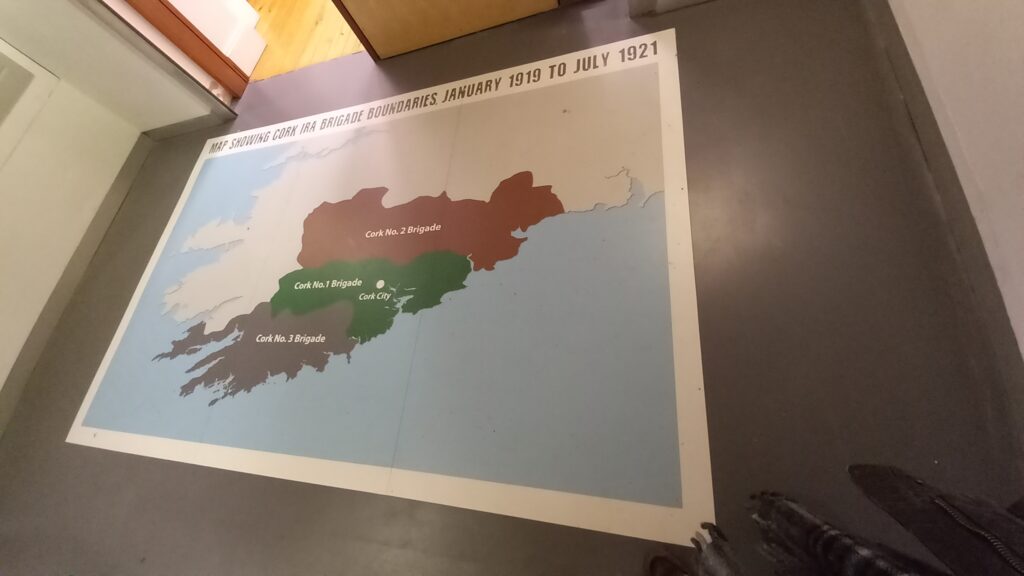
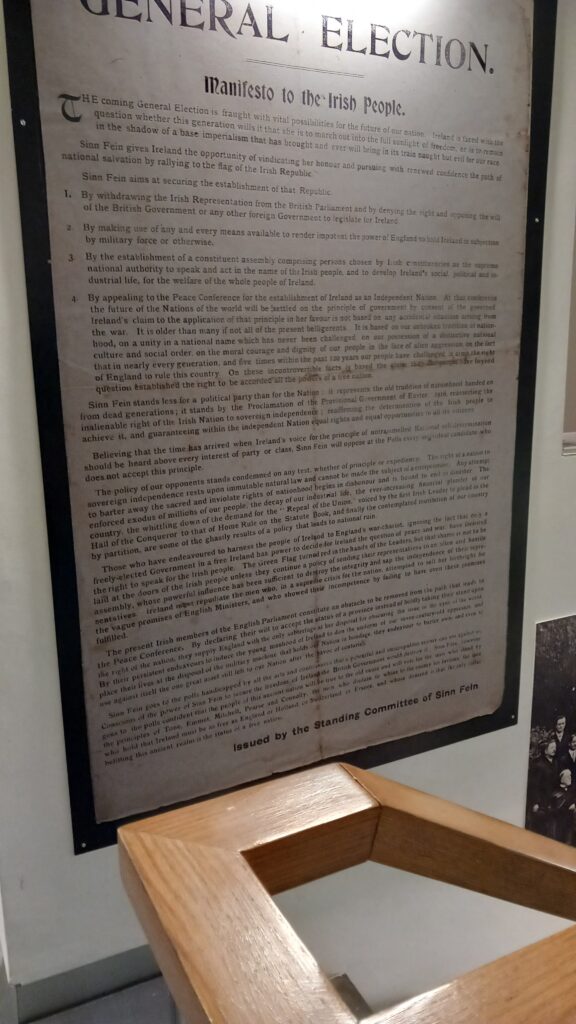
It is a very comprehensive display covering many aspects of that time, and has a lot of information about both the British forces and the Irish republican movement fighting to gain independence for Ireland. There are lots of displays showing the weapons and uniforms of both sides, and many documents and contemporary newspaper articles outlining the key events. It’s very stimulating visually particularly if somebody has a good interest in history.
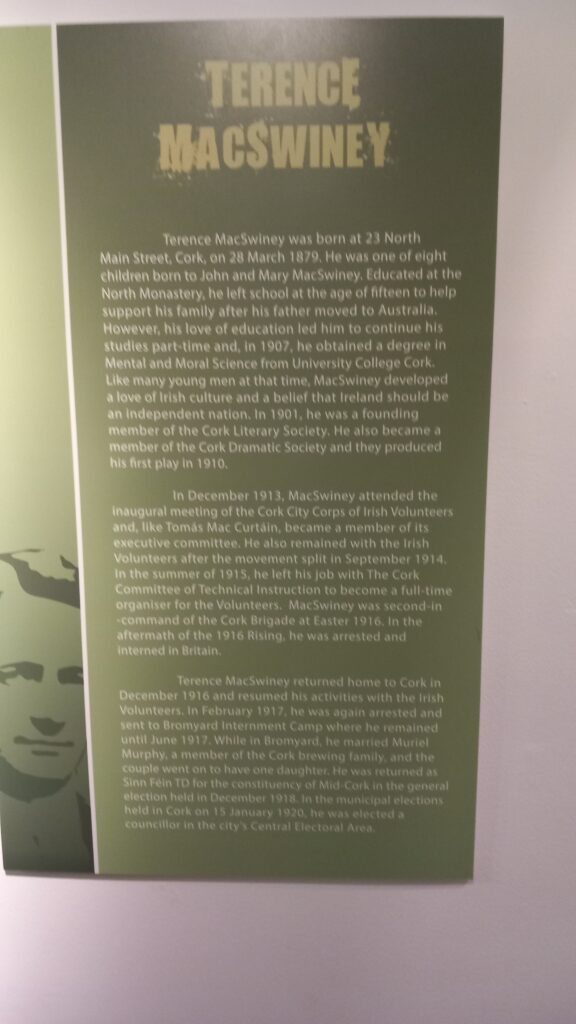
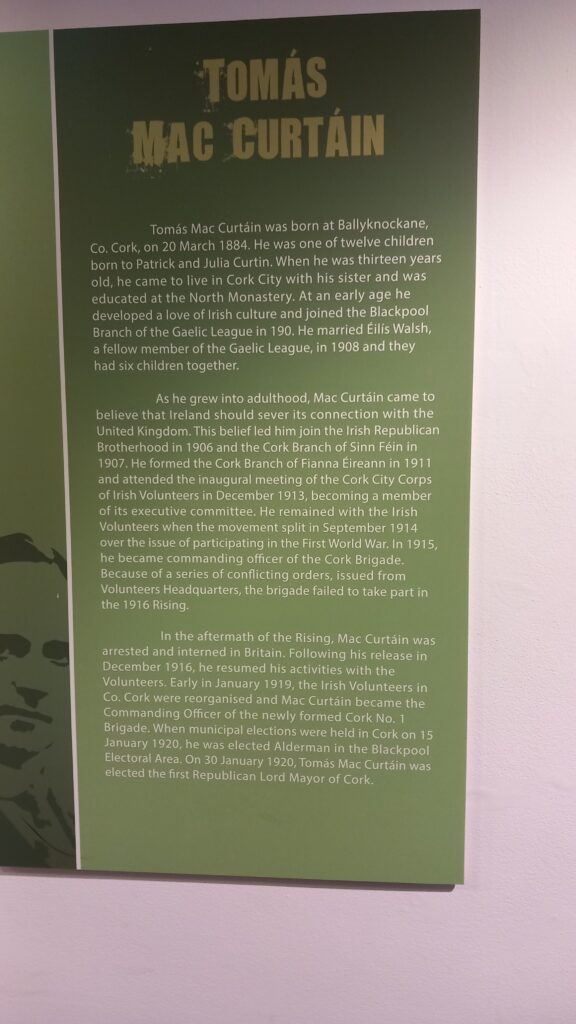
It also covers the burning of Cork, and highlights some key figures form the conflict who are well remebered today, such as Terence MacSwiney and Tomas Mac Curtain.
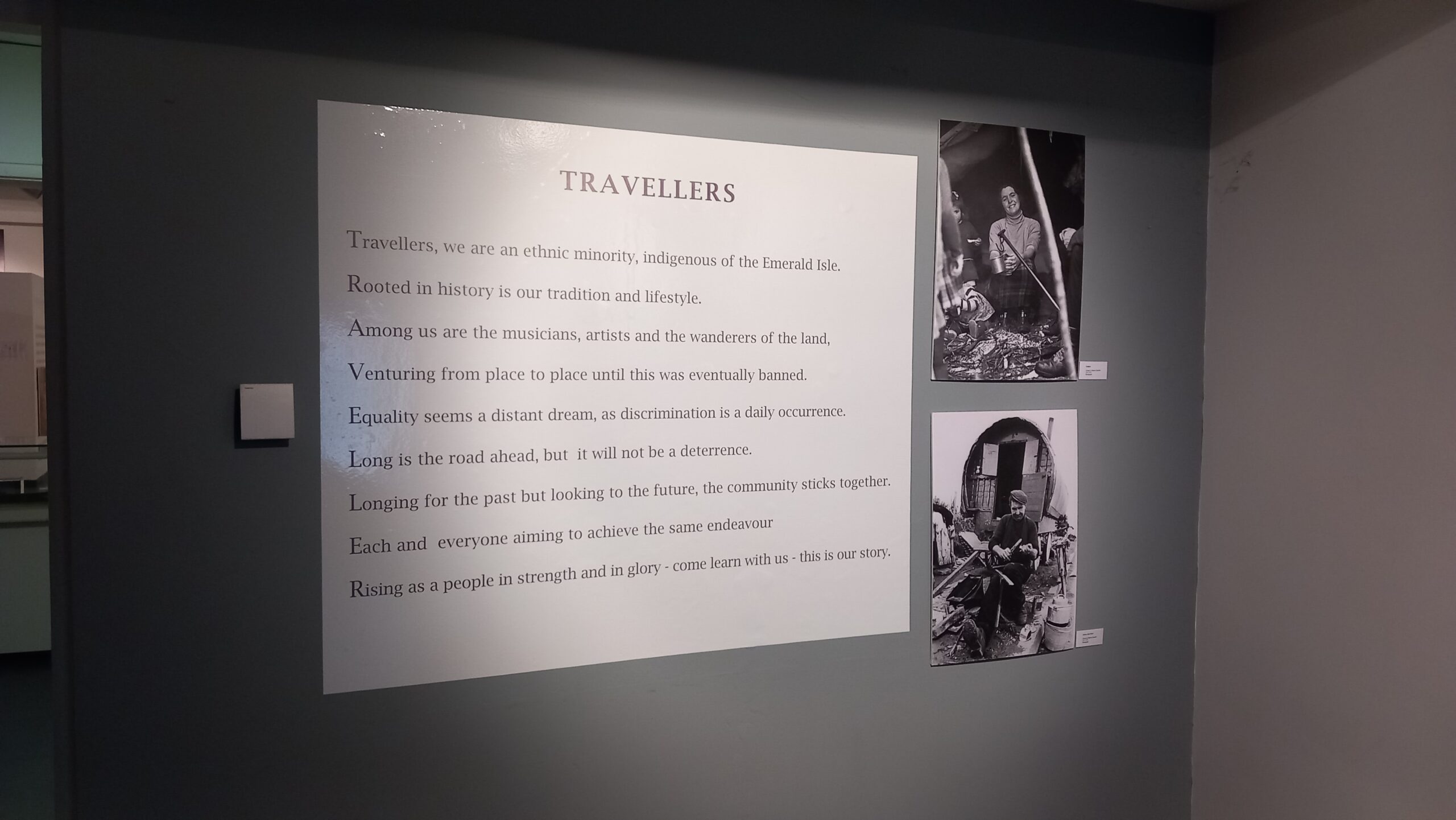
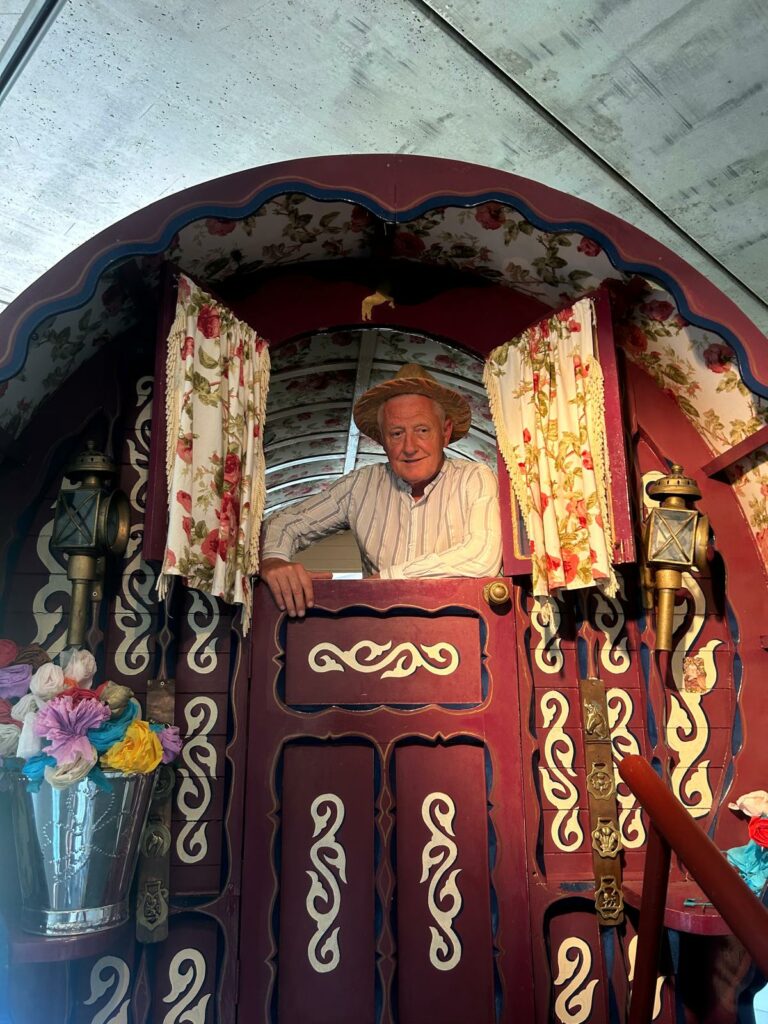
Another room upstairs is dedicated to the Traveller community, celebrating their heritage in Ireland as an ethnic minority. Among its exhibits is a lovely recreation of a beautifully decorated traditional traveller wagon.
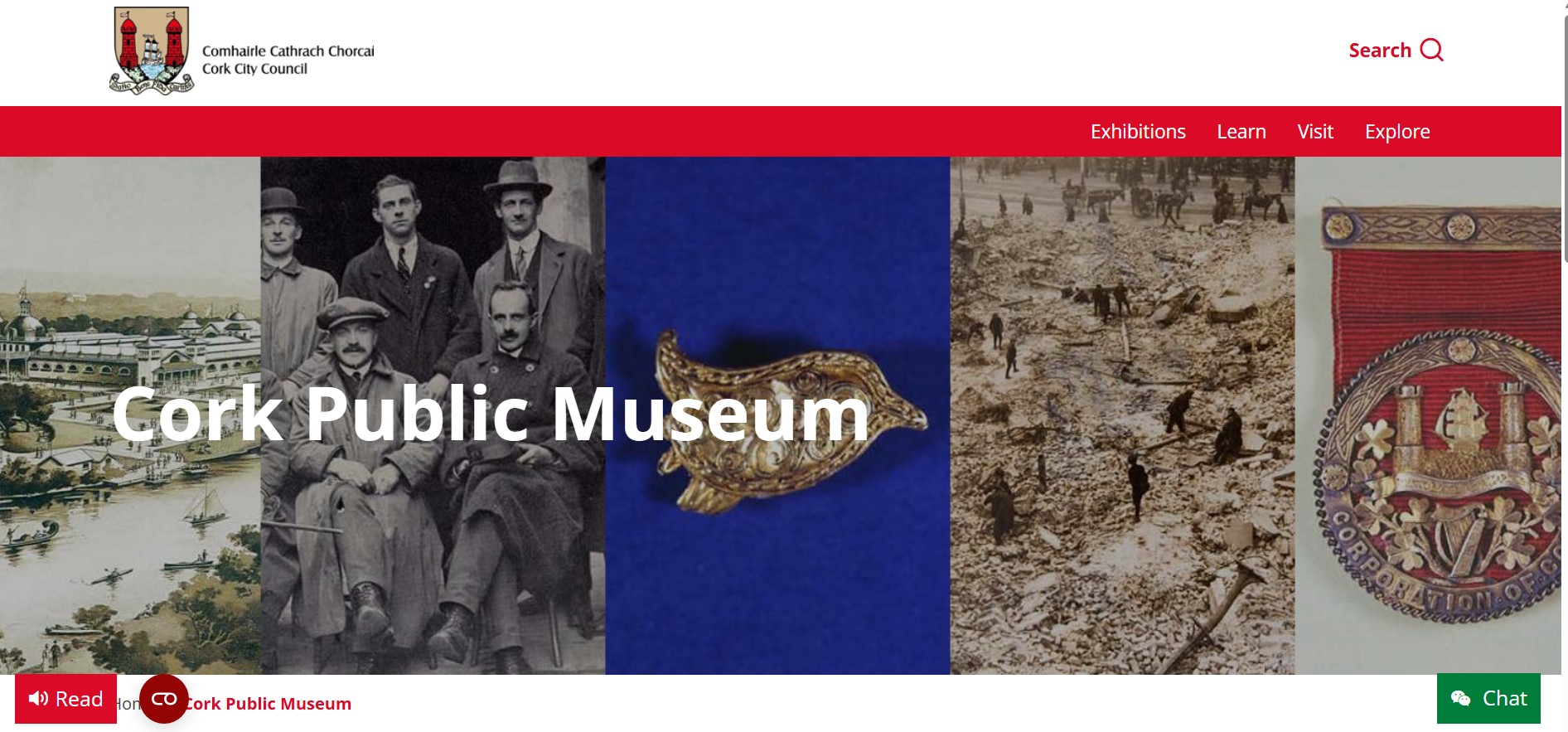
The museum also has as extensive website, which documents a lot of its collection, has a good bit of educational content with a “Learn” section. It describes some of the collaborations and community outreach programs with various groups they have done over the years, which look to have produced good outcomes. I’d like to have some sort of interactive online outcome from this project as well, which we can hopefully develop with the group’s guidance as we go along.
Project Sessions
Week 1 15/4/2026
Week 1 was an introductory session in Ballyphehane Community Centre, where I began to get to know the participants and did a presentation where I showed some examples of previous collaborative projects I had done with other groups, and a little bit about my own practice with some samples of work. While people seemed to find this interesting, there was feedback later that some found it too long a time to hold their attention, and that a break in the middle would have been very welcome. This was very good to know for future sessions, though I also intended that sessions after this would have a lot more practical activity.
Week 2 22/4/2026
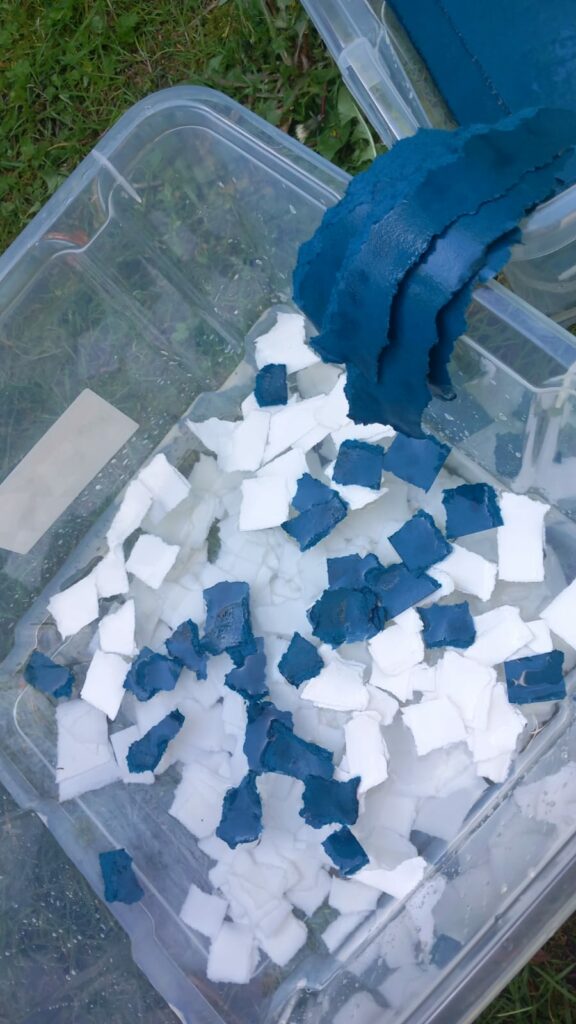
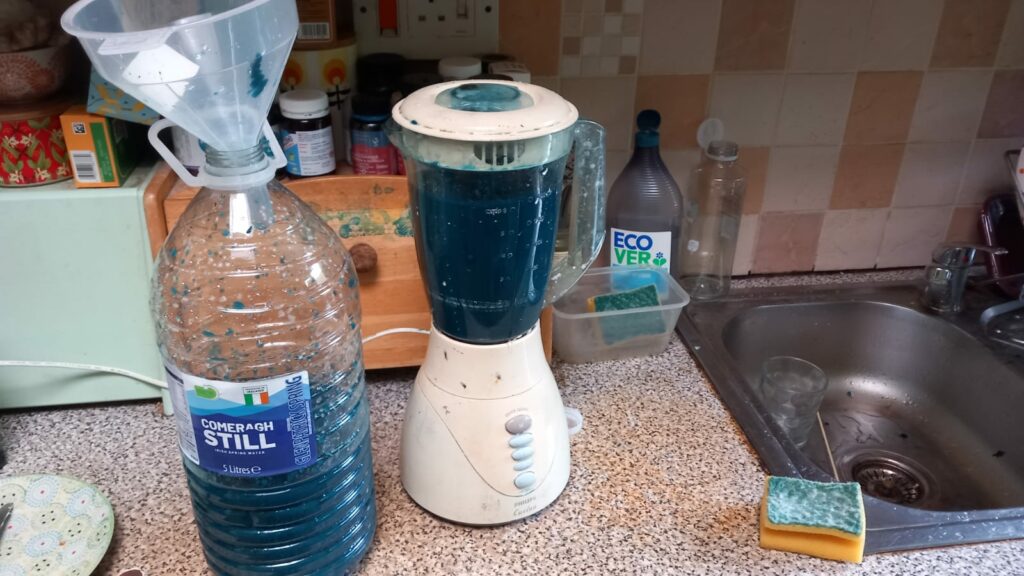
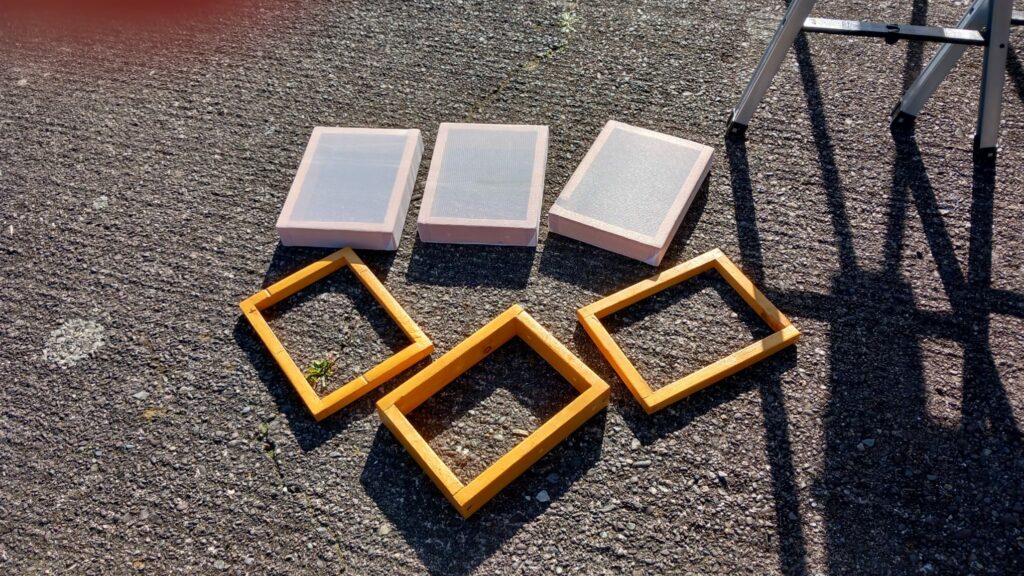
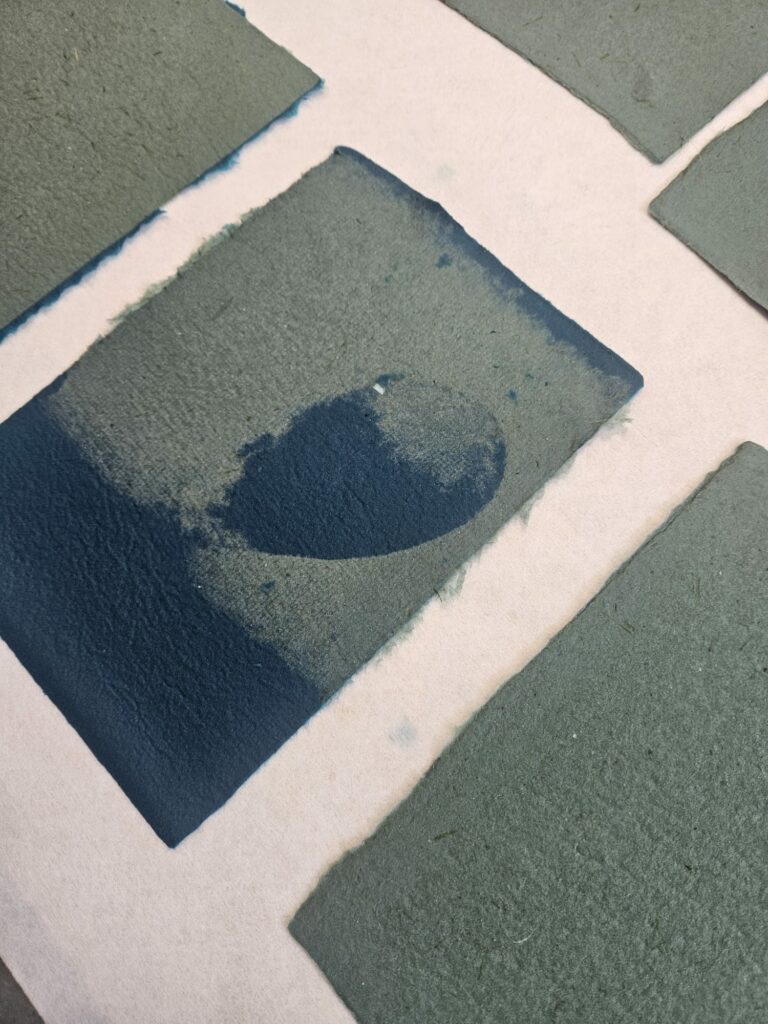
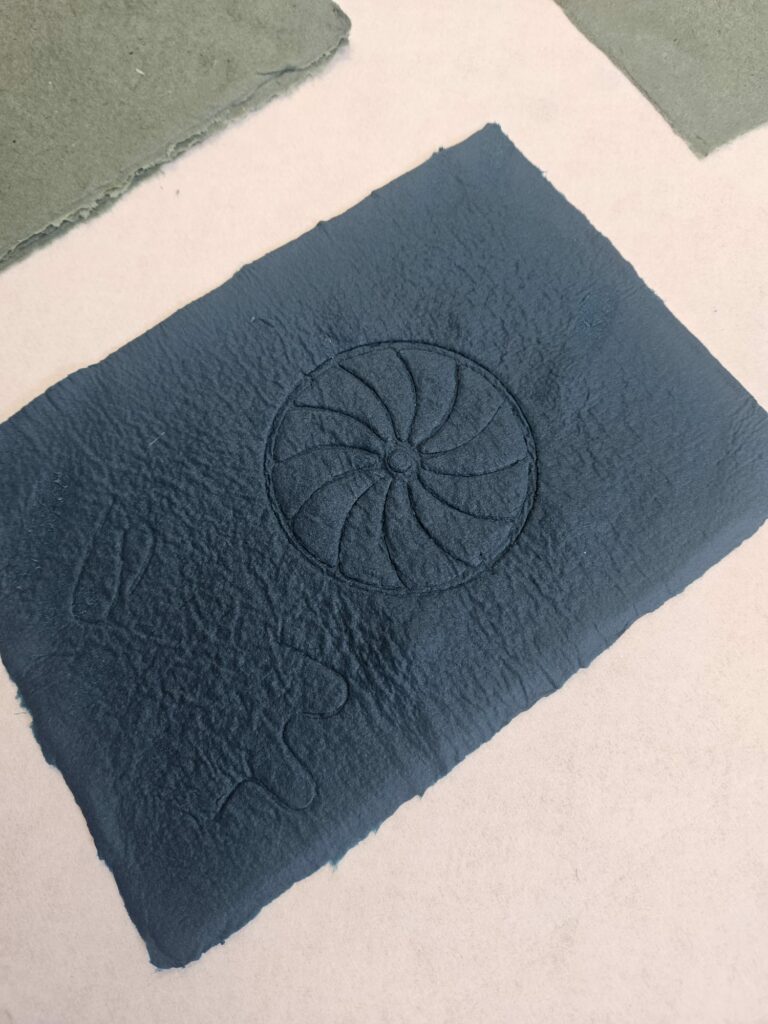
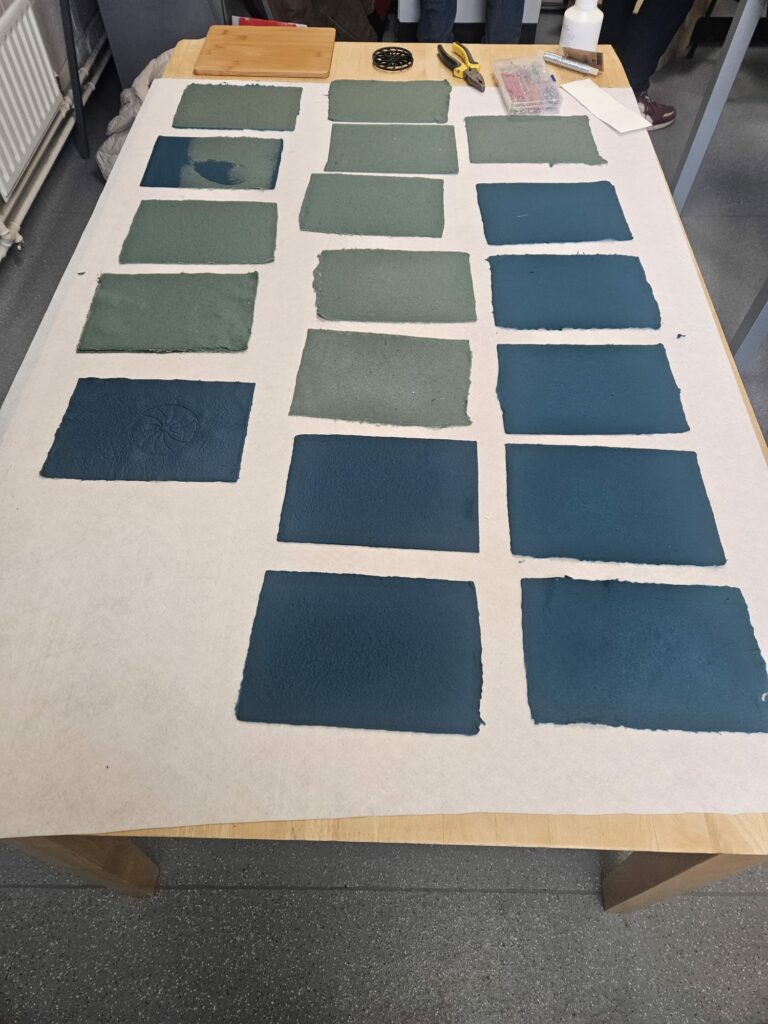
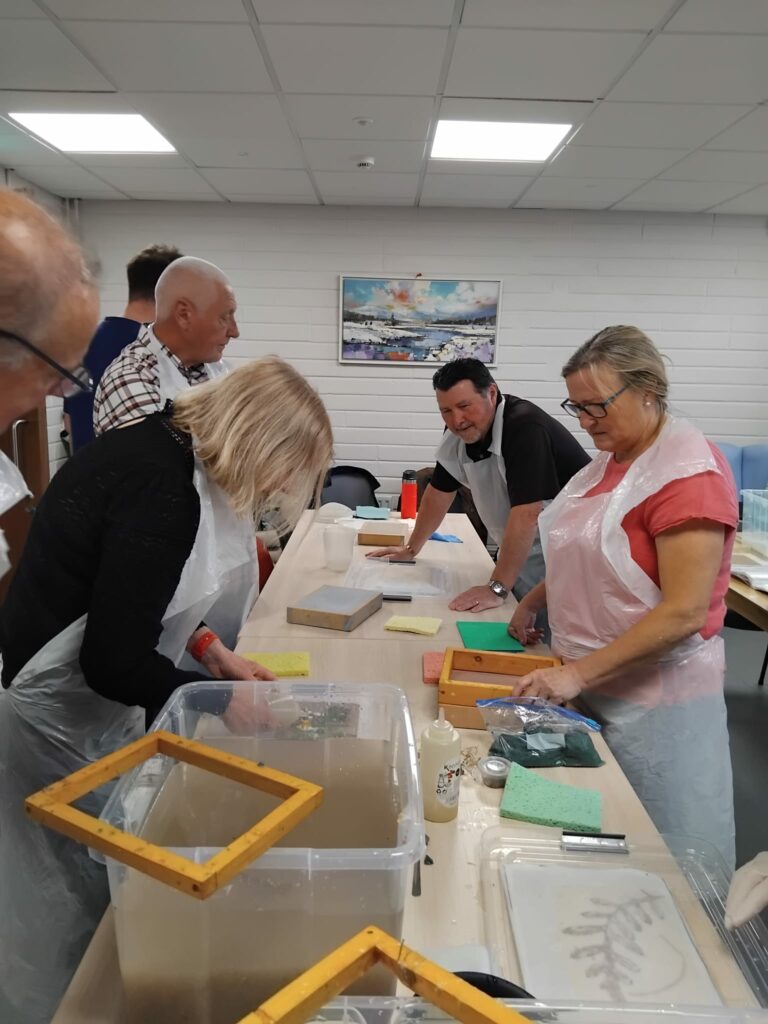
My intention was to start off with some sessions of papermaking, as it is a nice group activity and is pretty low impact in terms of experience needed and is not physically strenuous for clients who may tire easily. As the sessions are only two hours long, and the room in Ballyphehane Community Centre only has a small sink, I wasn’t able to prepare the pulp on the day with the clients as I would normally like to. I prepared it offsite and brought it with me in containers, and explained the process of doing this to the clients. The first session was mostly an introduction to using the tools and forming basic sheets, and pressing them. I had prepared a compact kit so we would have all we needed to form and press a batch of paper about A5 size. The partcipants all formed sheets and we talked a little about embedding objects and how deckle edge is formed and where the watermark on handmade paper comes from.
Week 3 29/4/2026
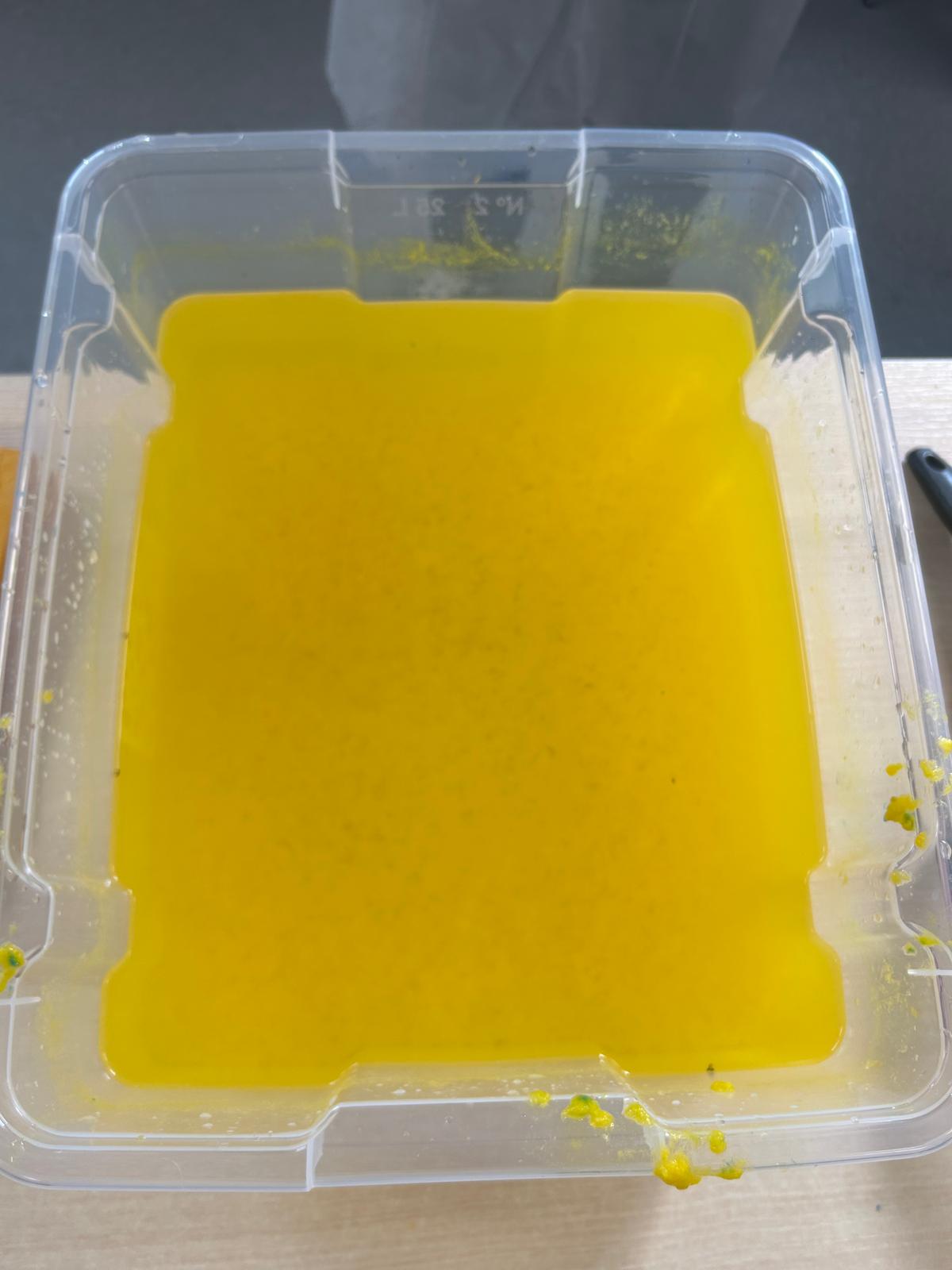
In this session we continued with the papermaking process and I demonstrated how to dye the paper pulp with pigments and retention aid.
Week 4 6/5/2026
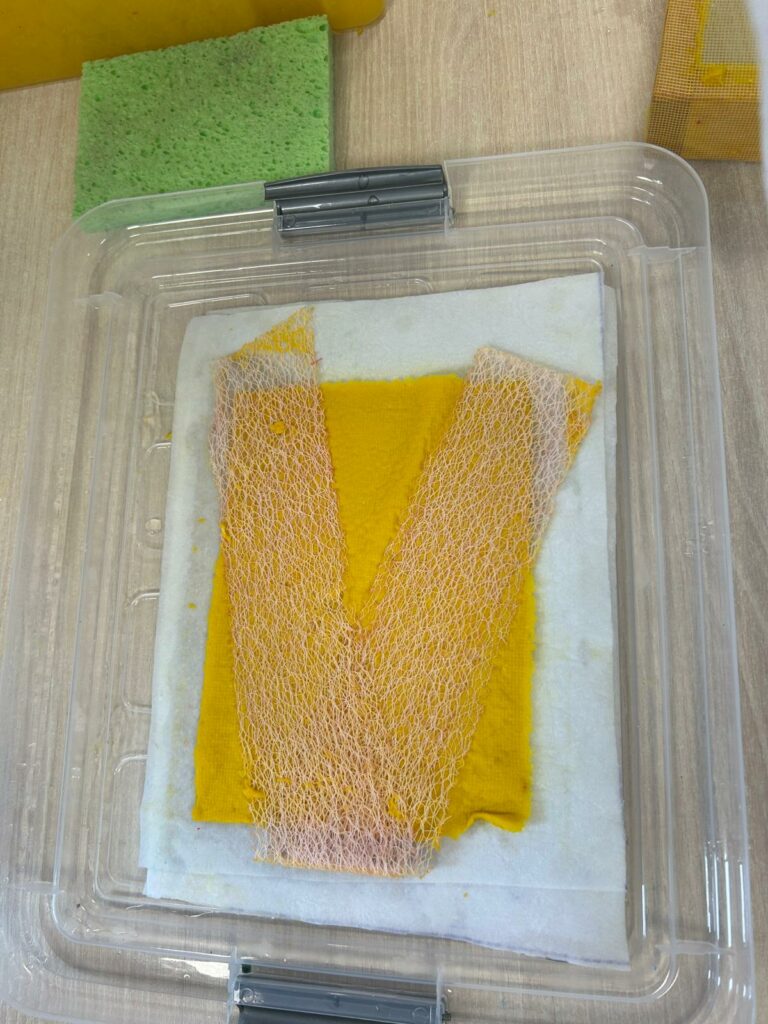
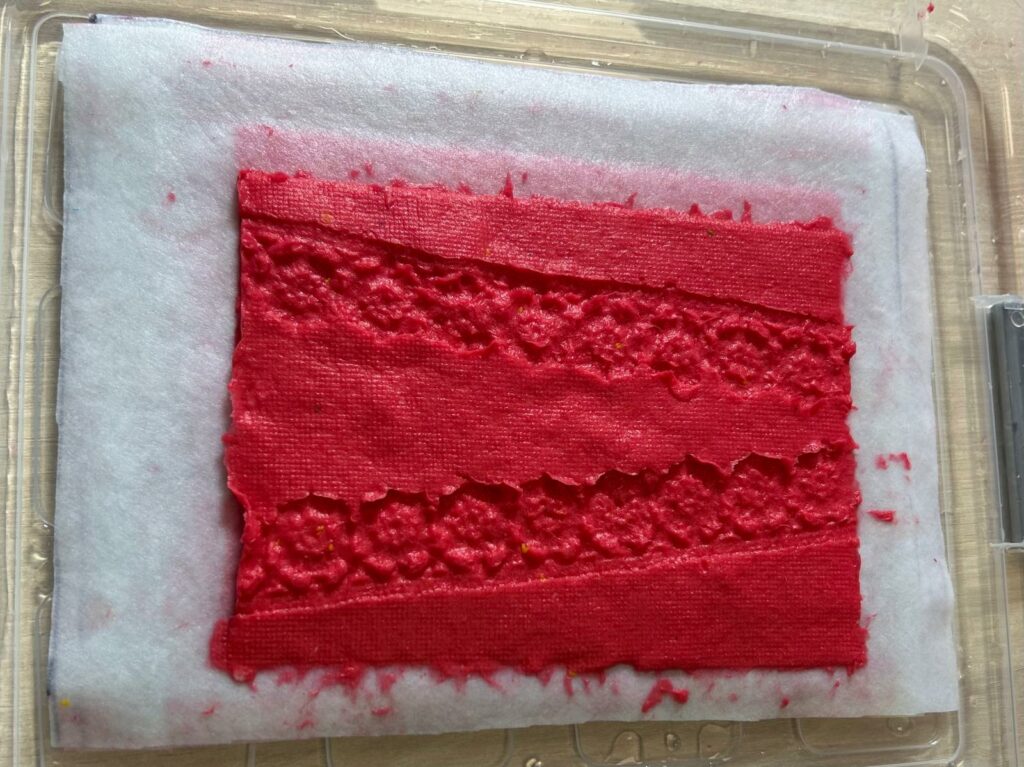
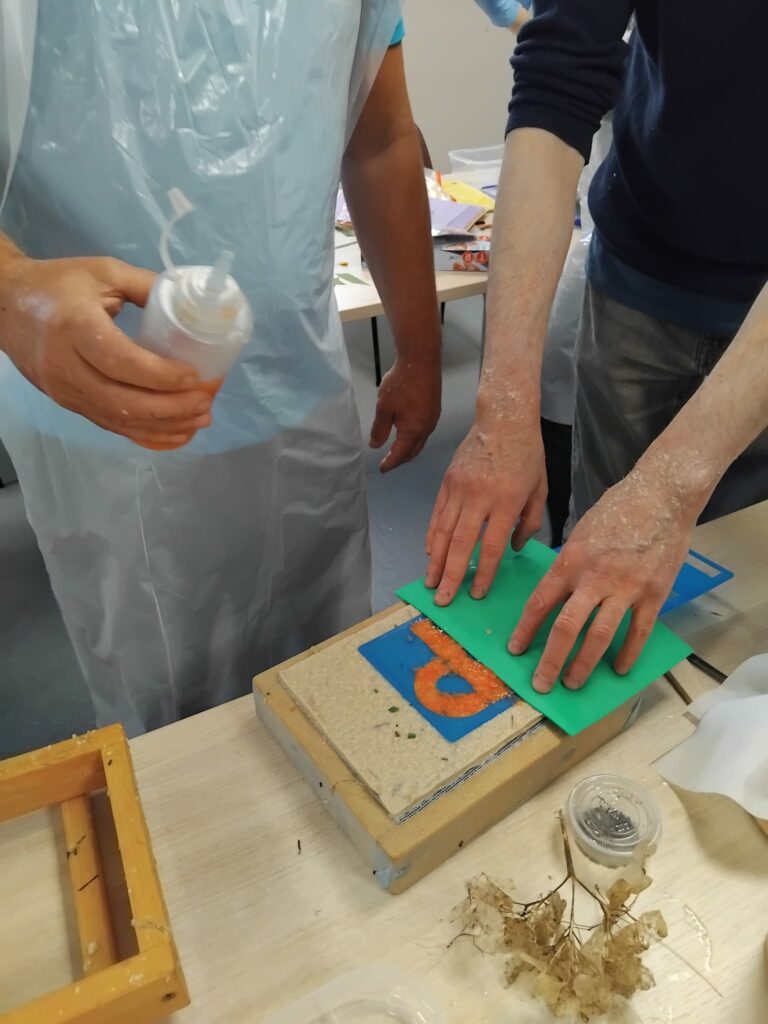
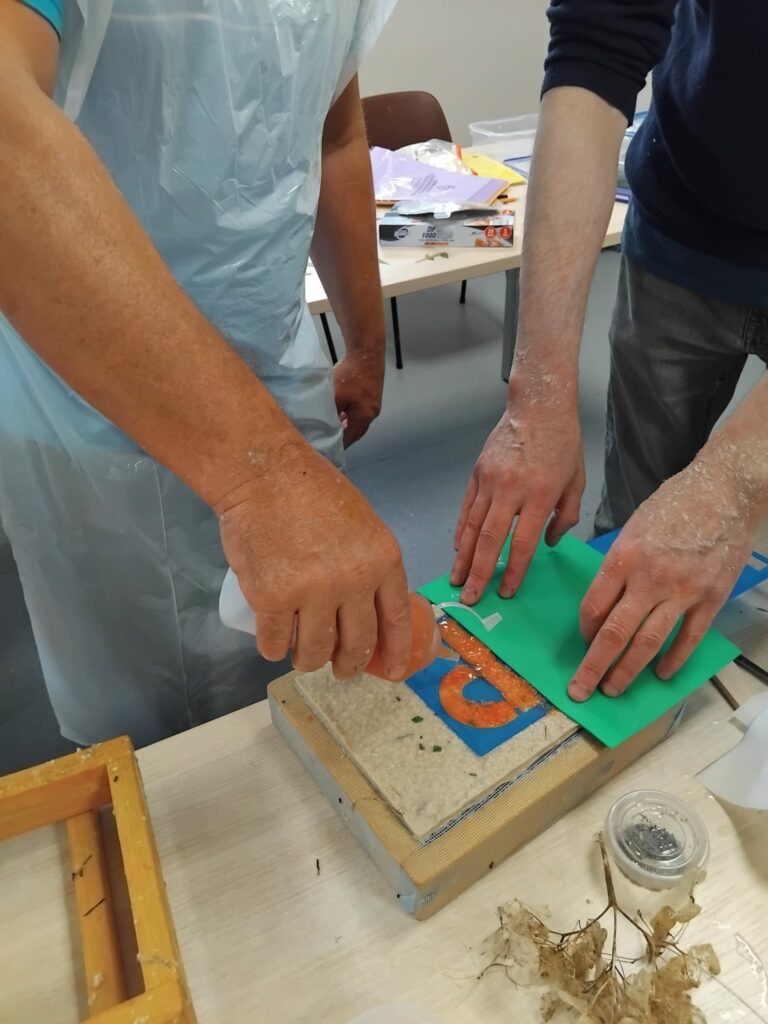
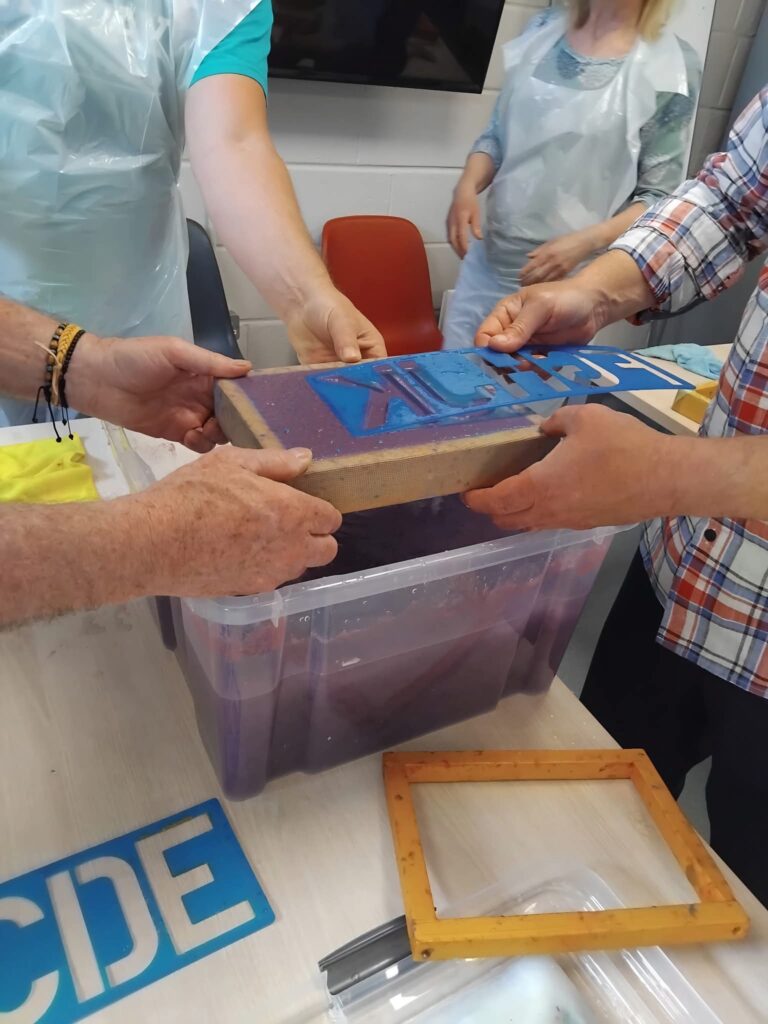
Here we began introducing objects into the paper pulp to from textures, and how to cut out stencils to combine several colours together. This was good as the clients began to explore how to introduce their own objects, designs and imagery into the paper, so it was an artwork rather than just a flat sheet
Week 5 13/5/2026
Museum first visit. The group was given a great introduction to the museum and its layout by Jessica who is the education officer. We then took some time explore the museum in more detail, and I was able to get a decent insight into what the individual clients were stimulated by in the exhibits, which should be helpful to inform the sessions going forward.
Week 6 20/5/2026
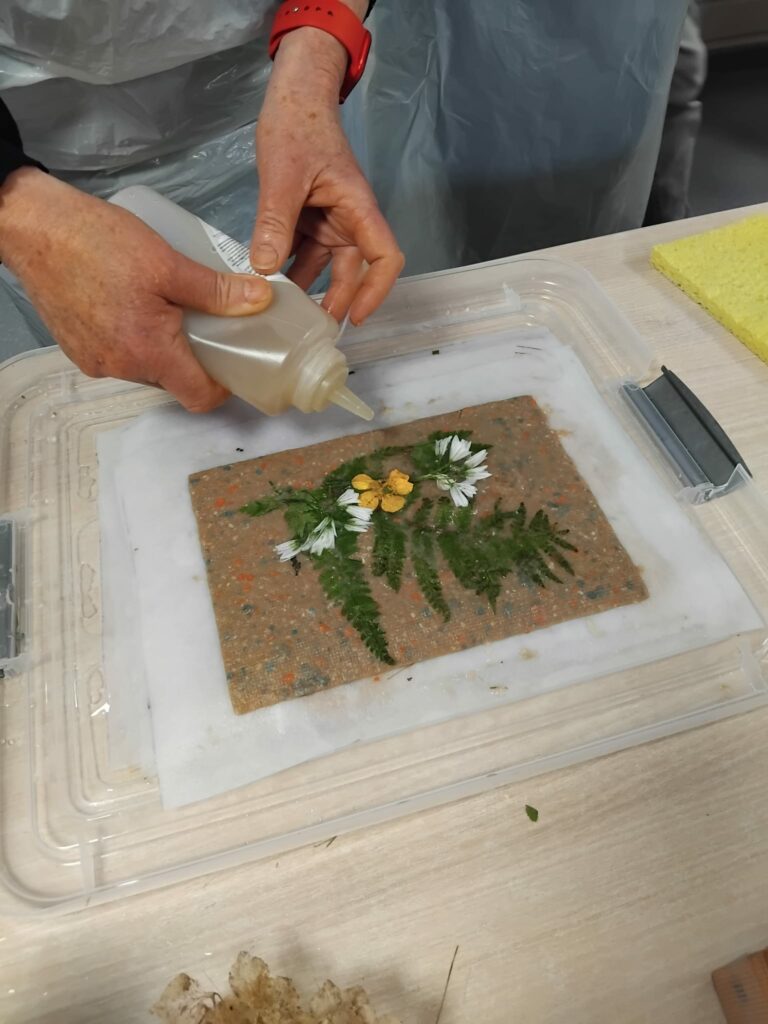
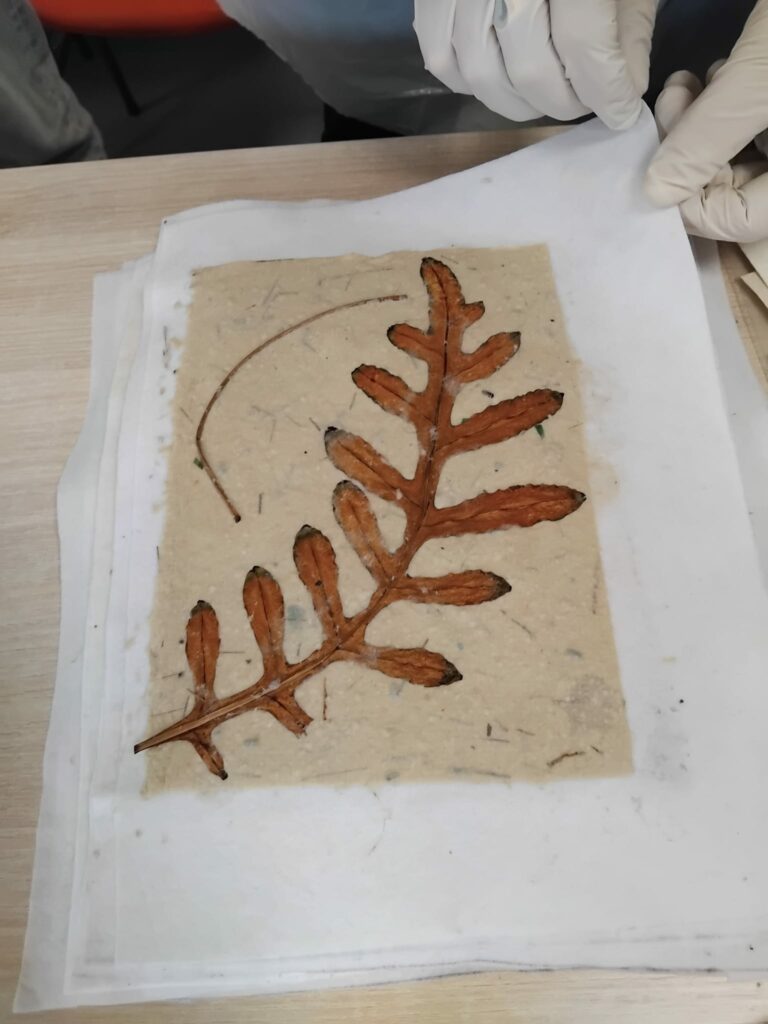
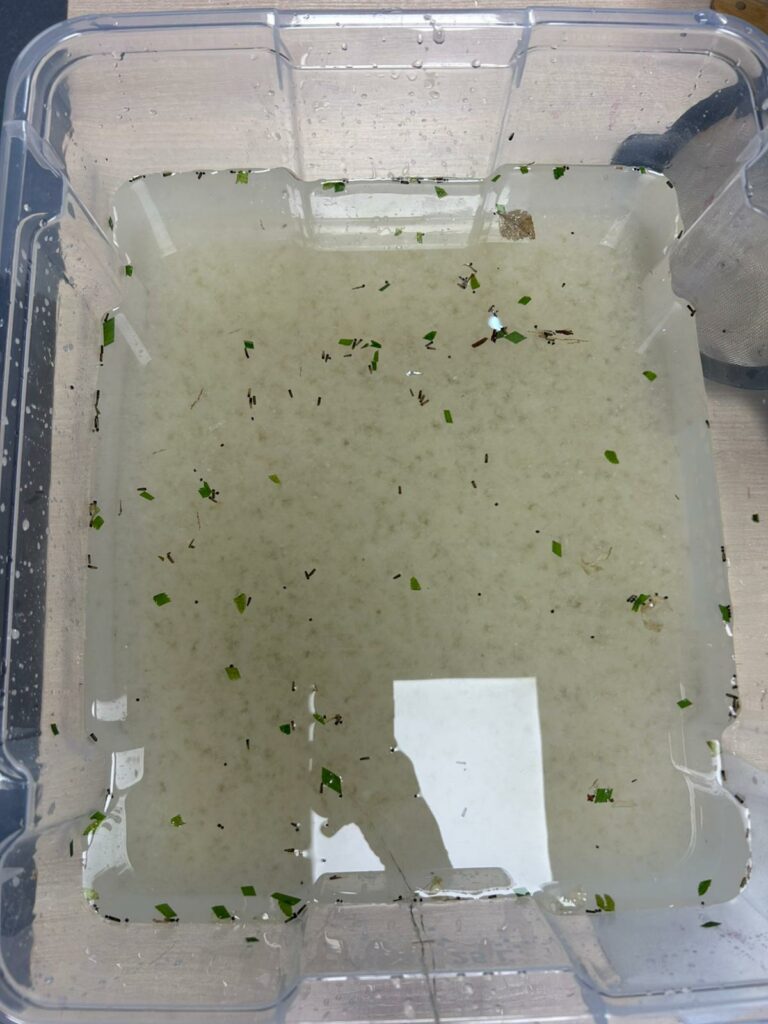
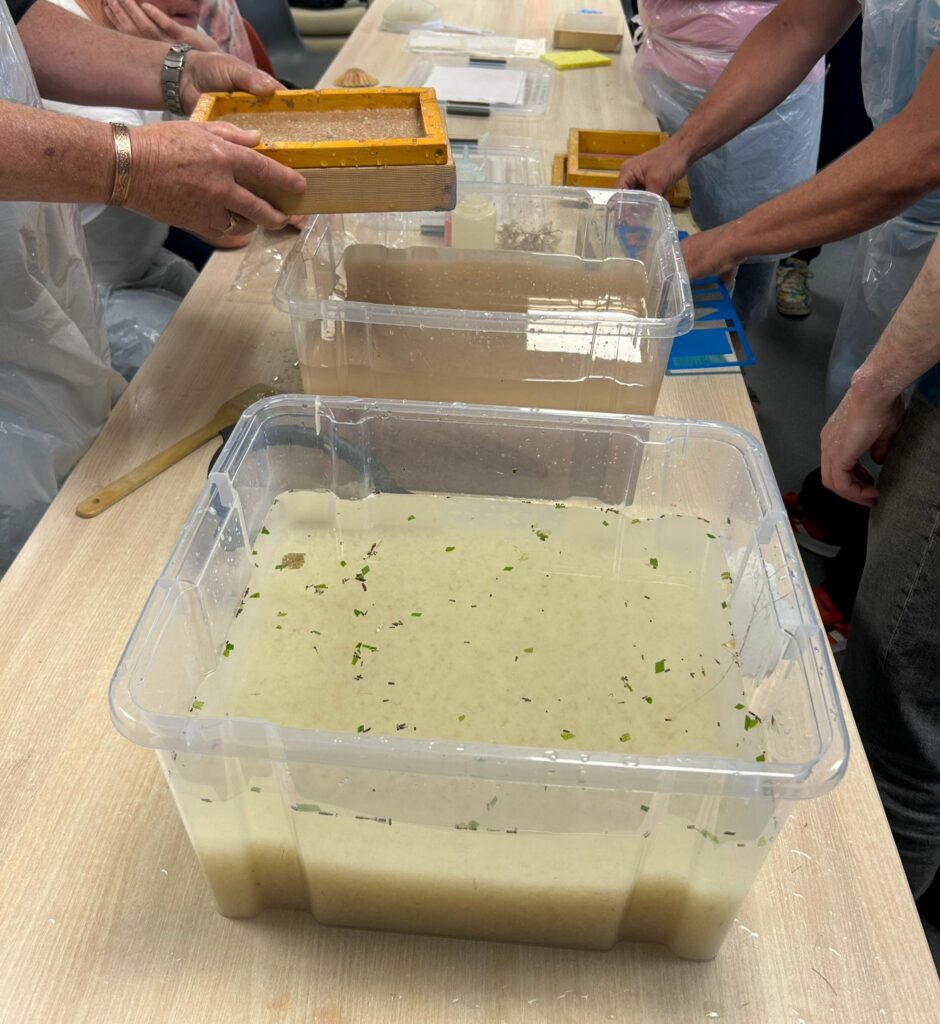
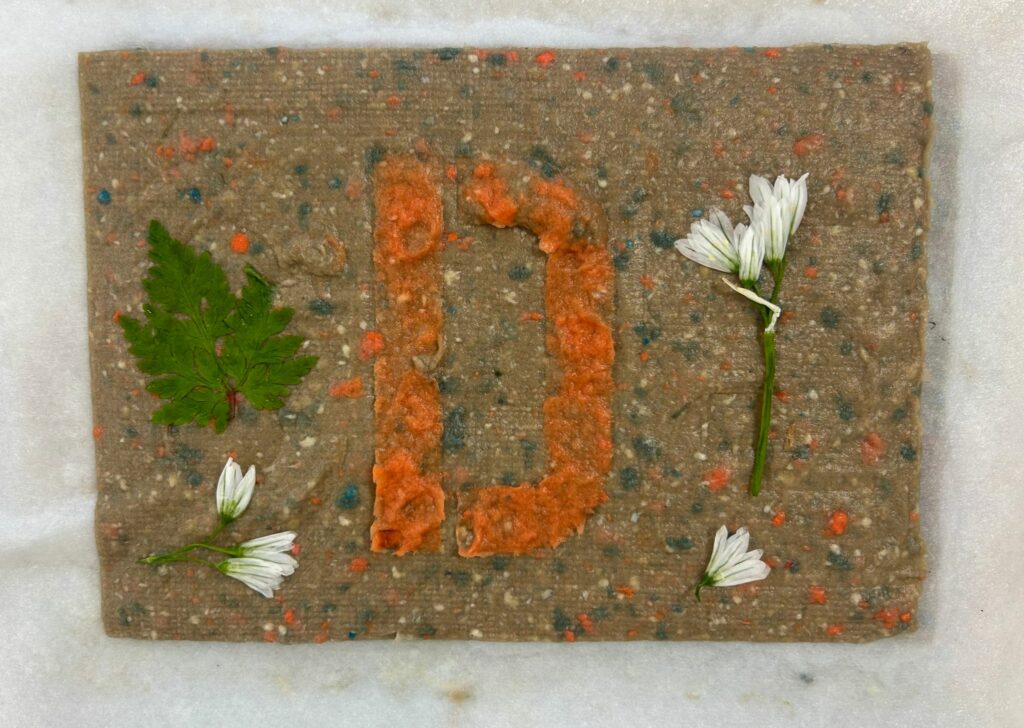
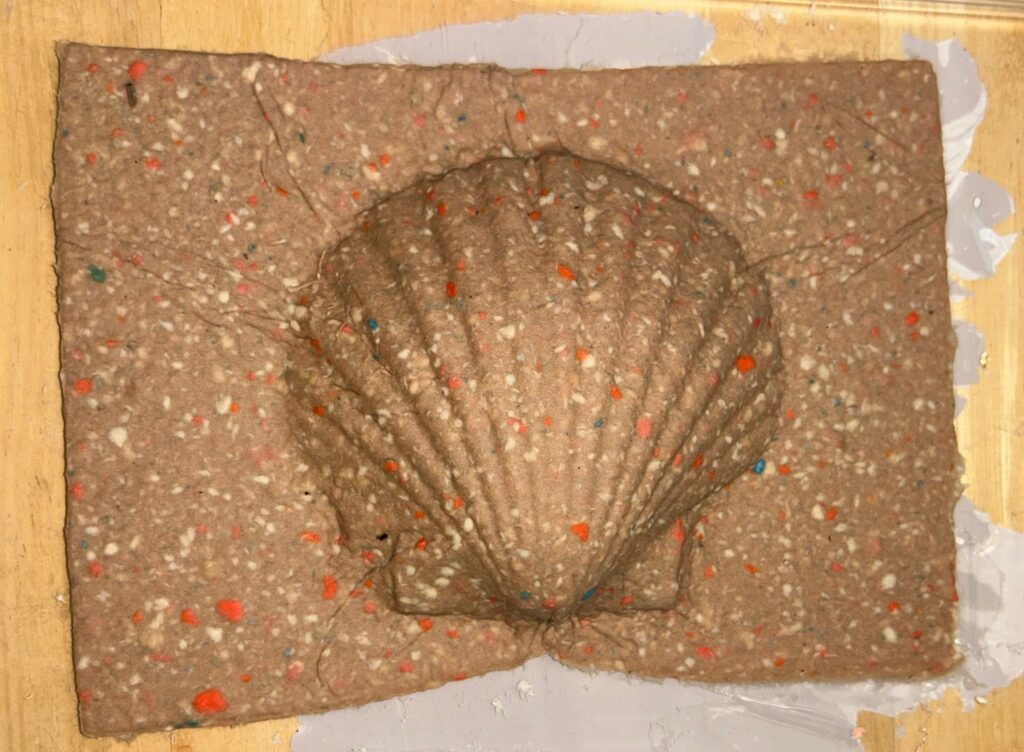
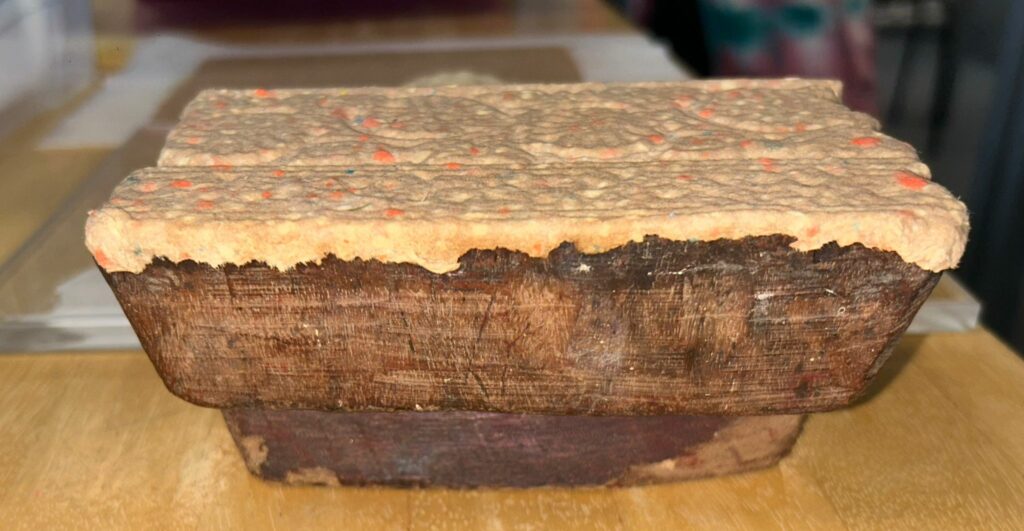
This week we continued to add a bit more complexity to the papermaking process, introducing pulp painting with stencilling, embedding objects into the paper pulp such as leaves. We began introducing three dimensional objects into the process with the paper casting Technique. Also introducing small pieces of fabric and plant material into the vat to give the paper additional texture.
Week 7 27/5/2026
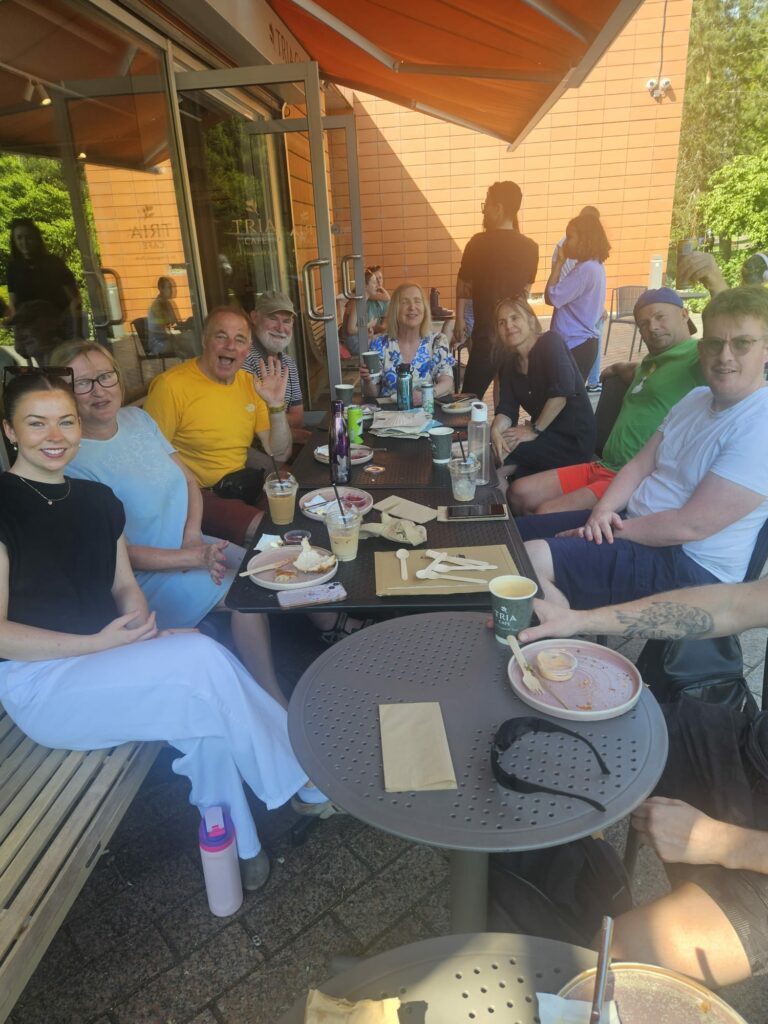
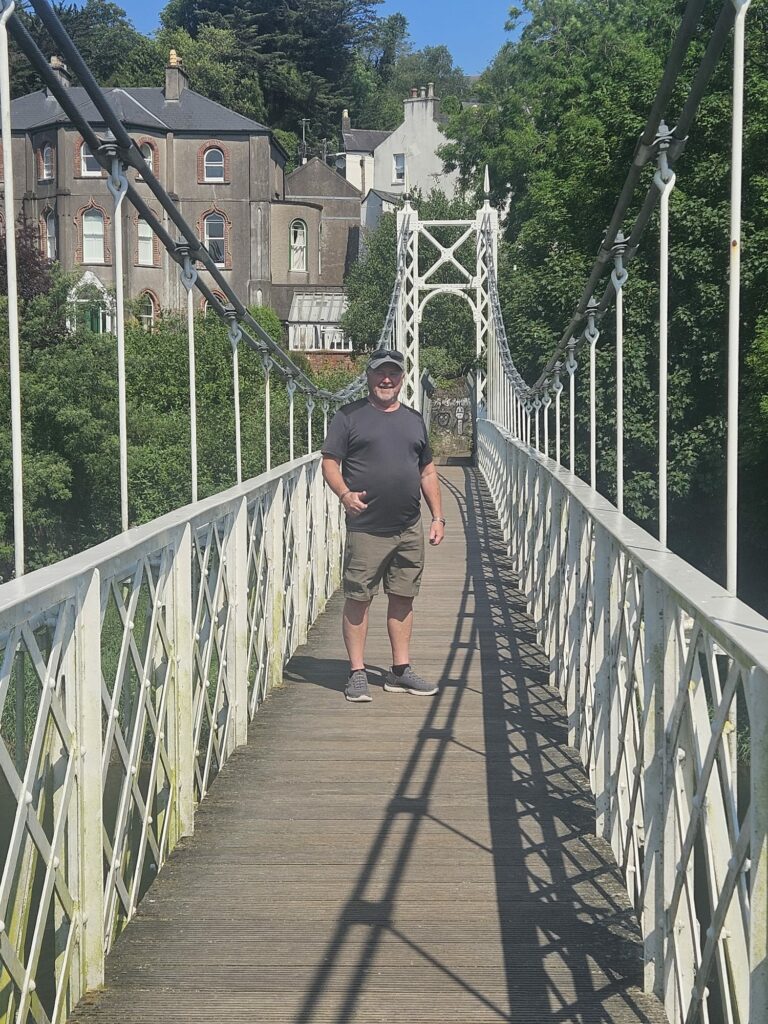
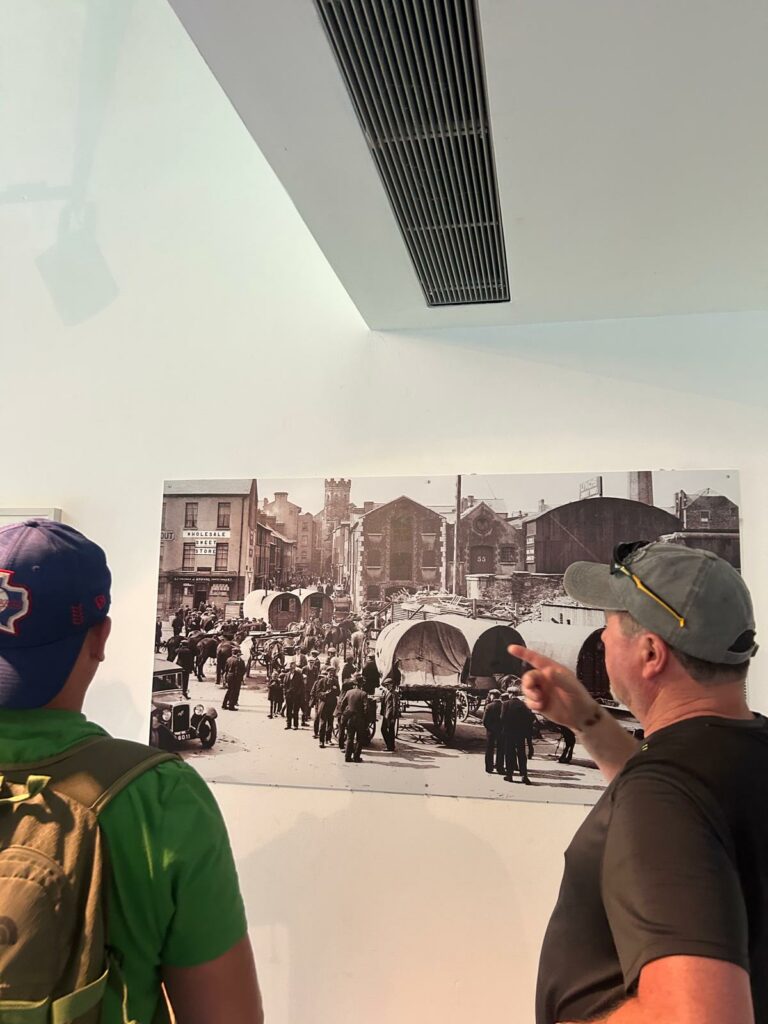
Sunny day in the museum – tea and coffee! A lovely opportunity to meet the clients in a nice informal setting and for them to see the work that they had made up to that point. Many of the clients took the opportunity to go around the museum and grounds of the park and take some photographs of places and exhibits that interested them.
Week 8 3/6/2026
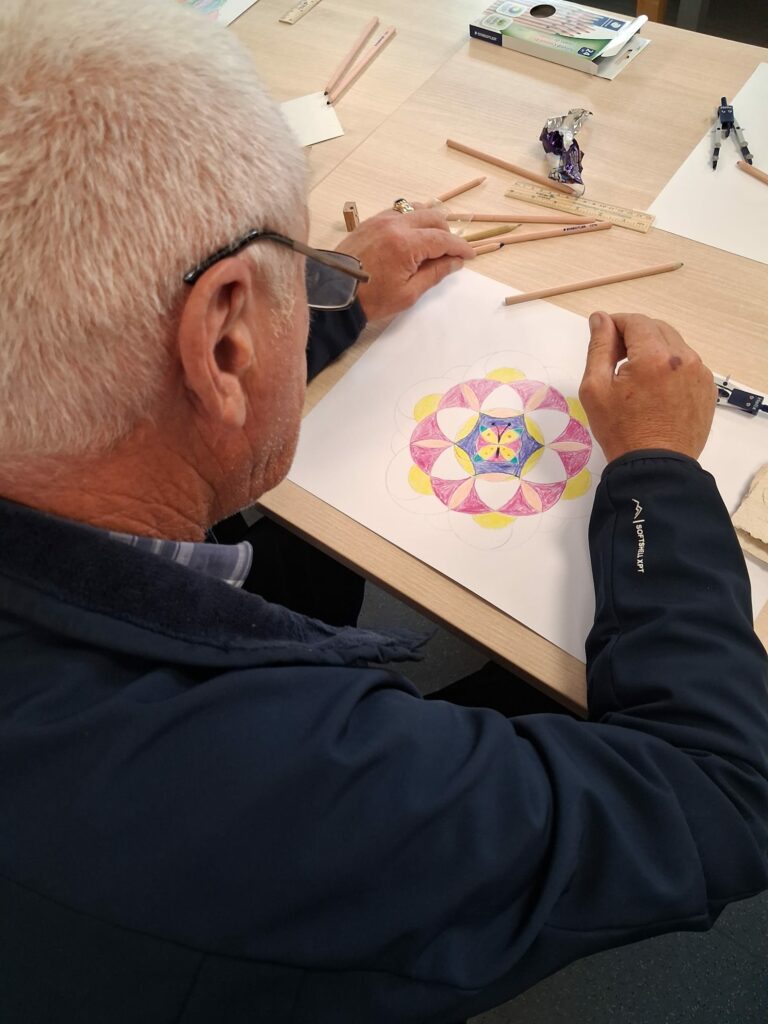
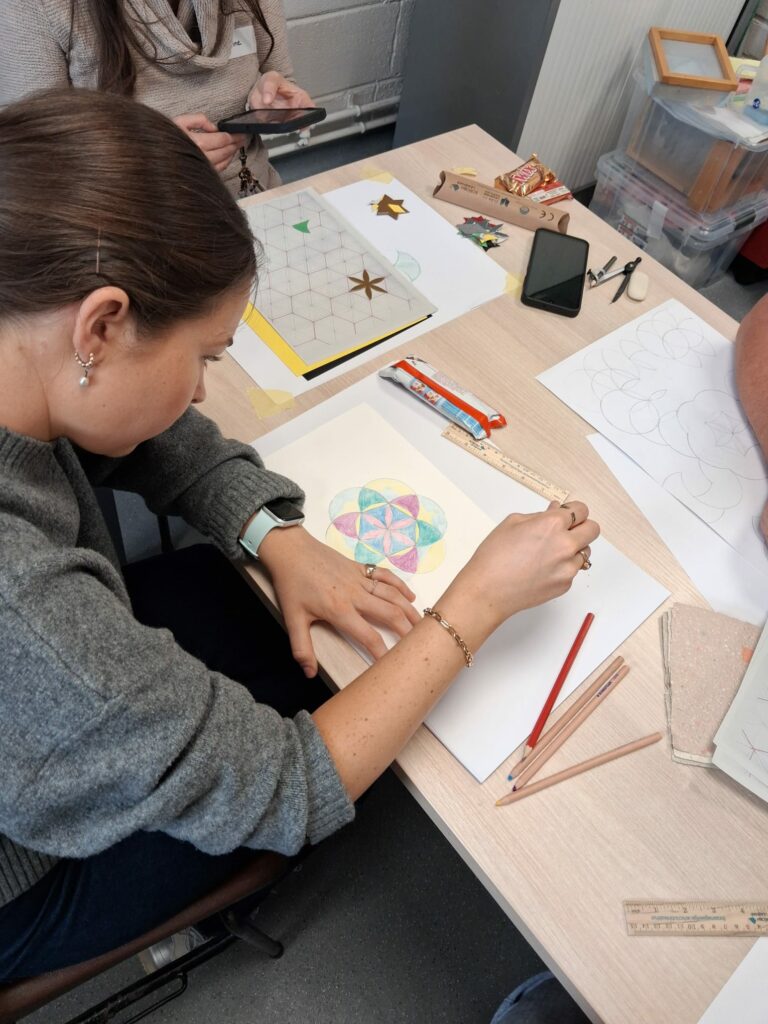
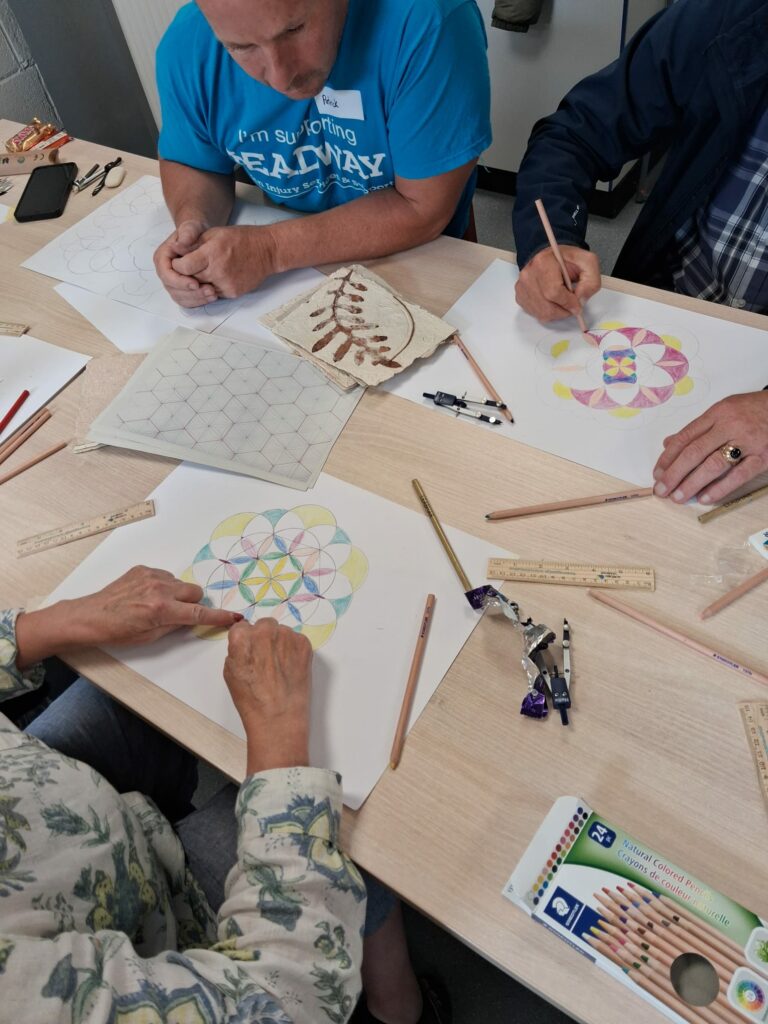
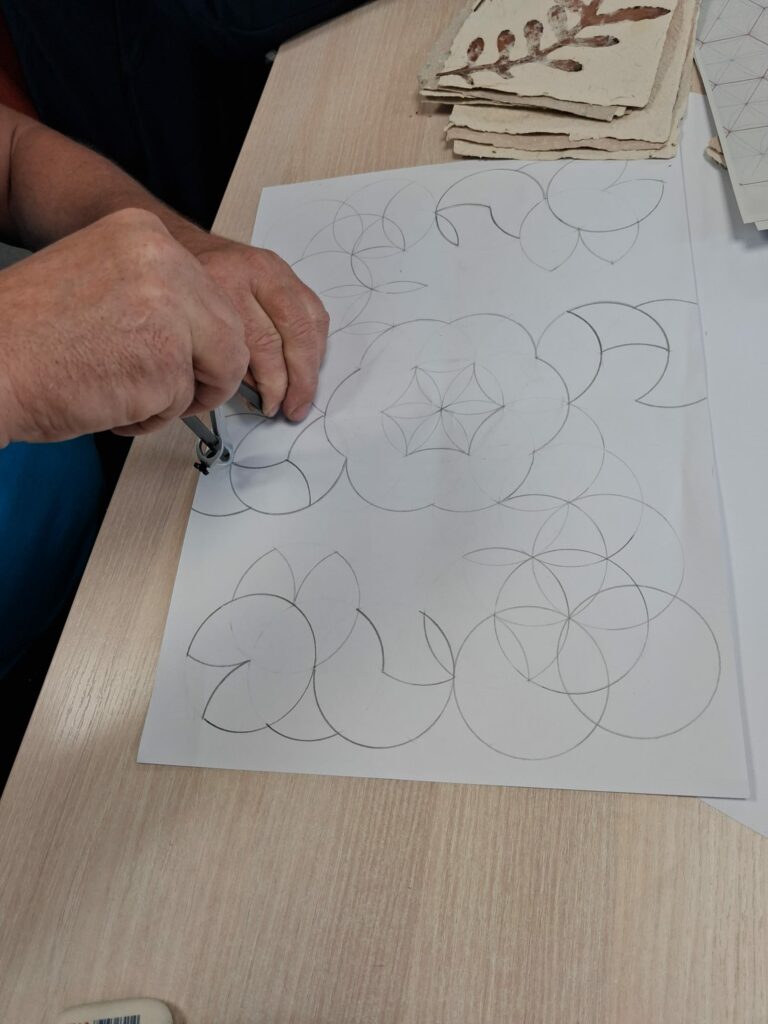
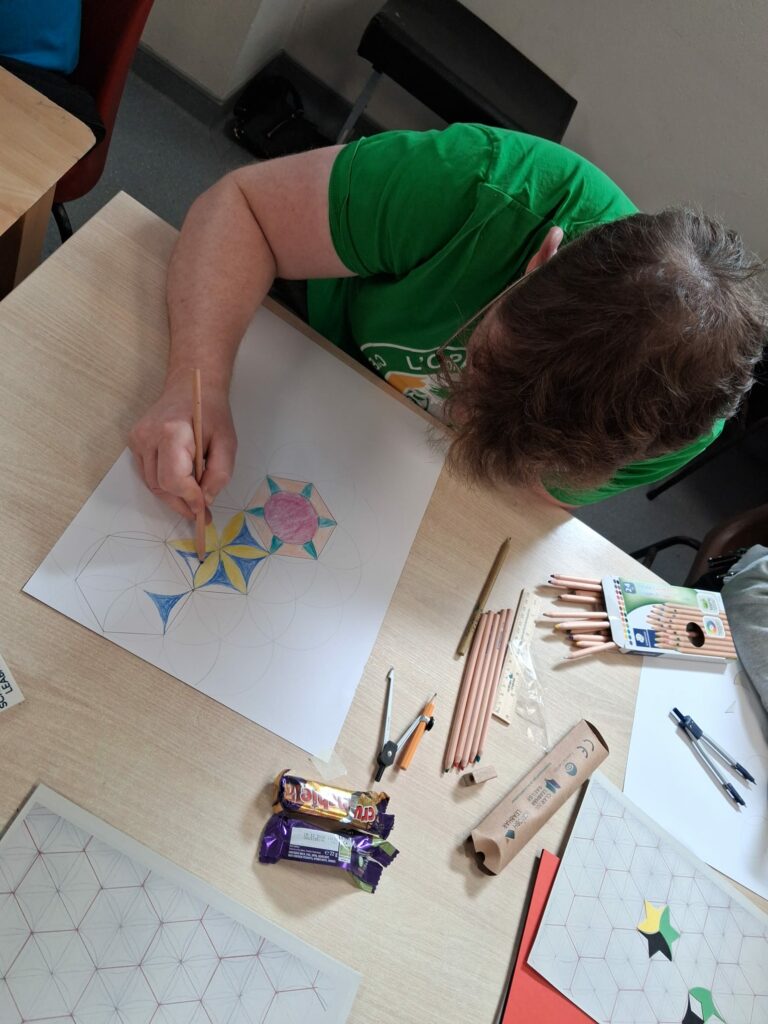
Geometric drawing – this week I decided to do an exercise in tesselation and geometric drawing with the group which I had previously designed for Science Week in UCC earlier that year. Since one of the clients had suggested that hexagons form a very good way of tiling pieces of art together to make larger forms, I wanted the group to explore for themselves how this can work. With compasses and pencils we drew tiled hexagons on a sheet, and the group used their intuition to select and colour sections to make very accomplished designs. I had also prepared containers of cut out shapes to fit into the hexagonal designs so they could make collages. The results were very individual and creative.
Week 9 10/6/2026
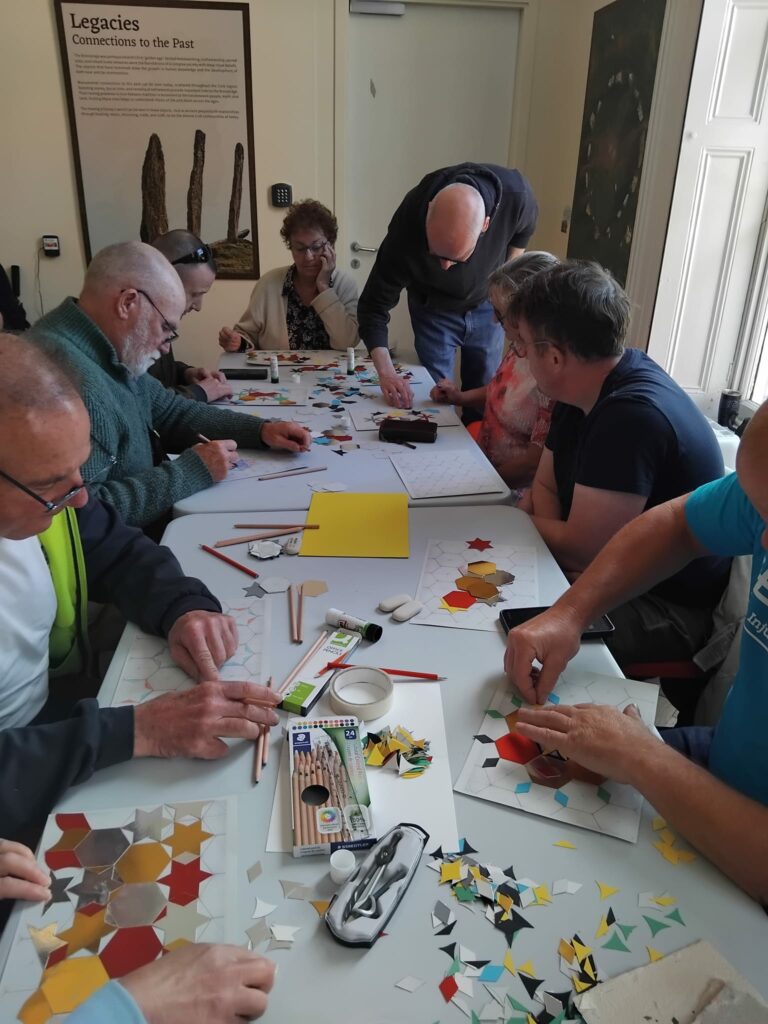
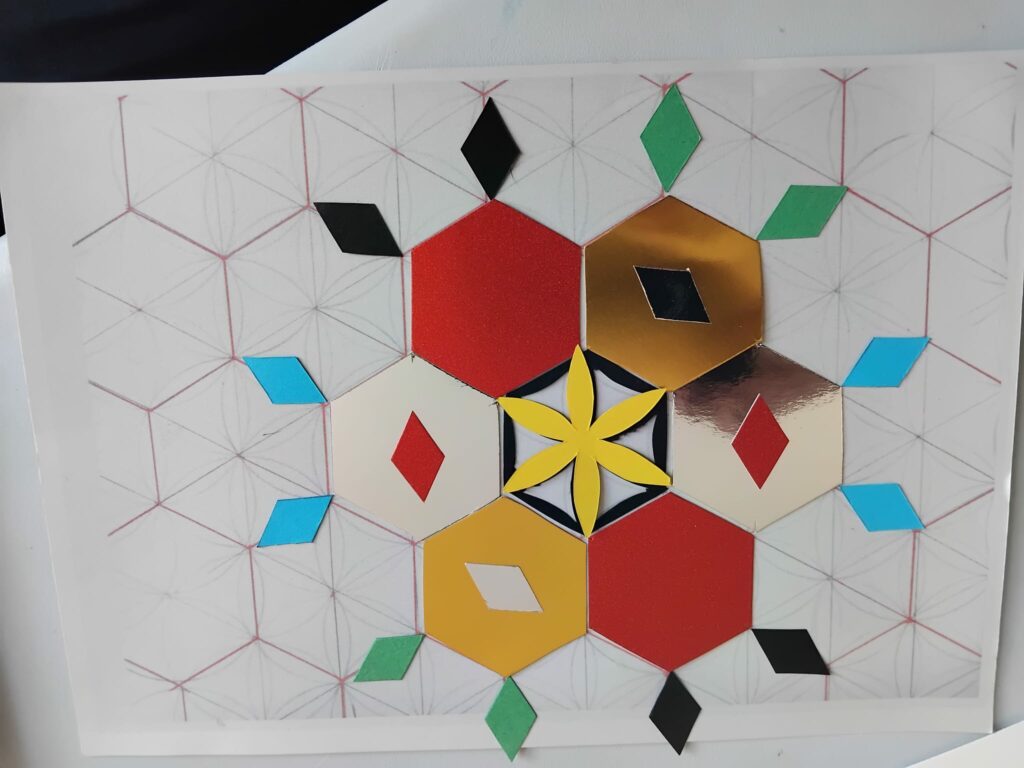
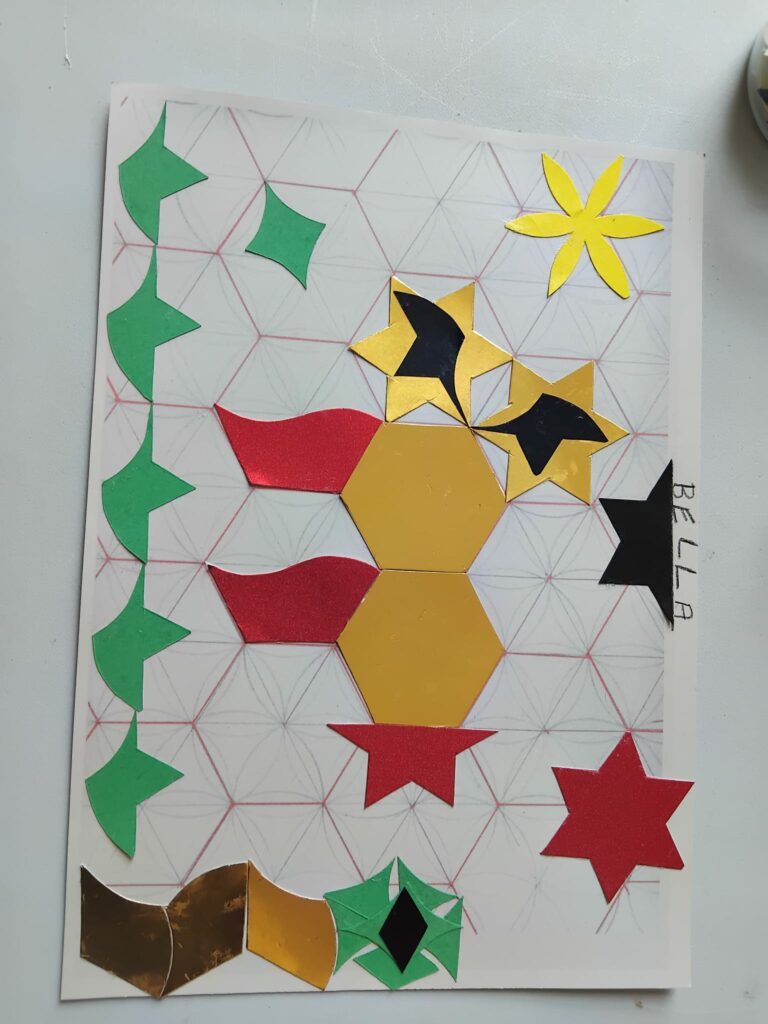
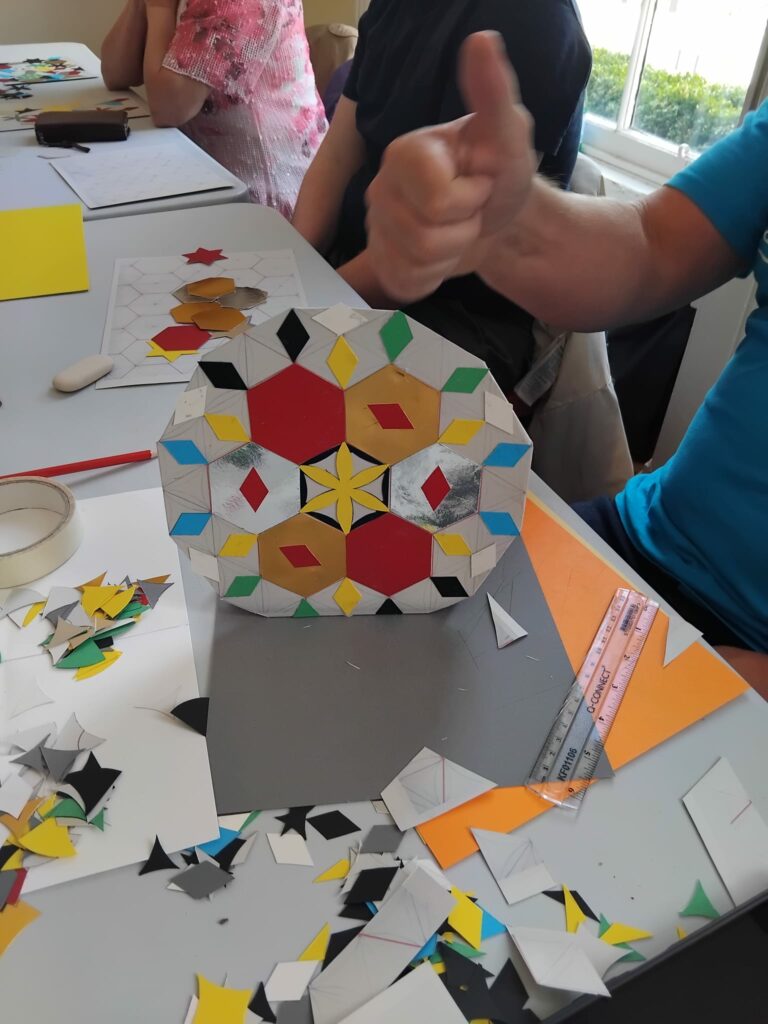
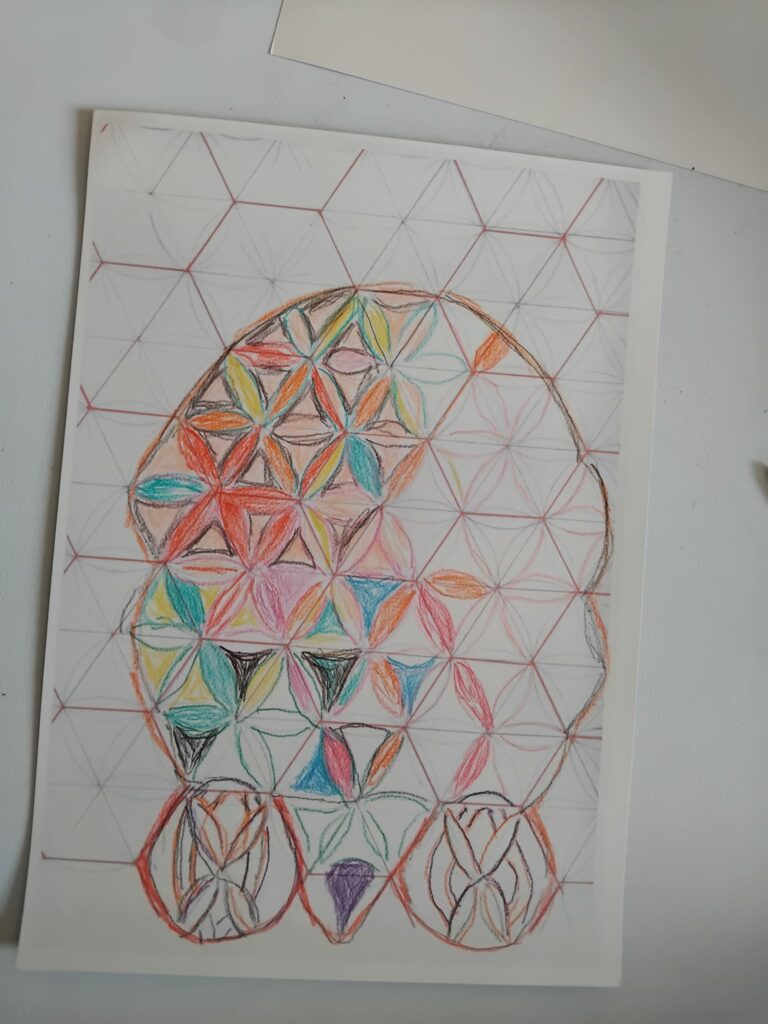
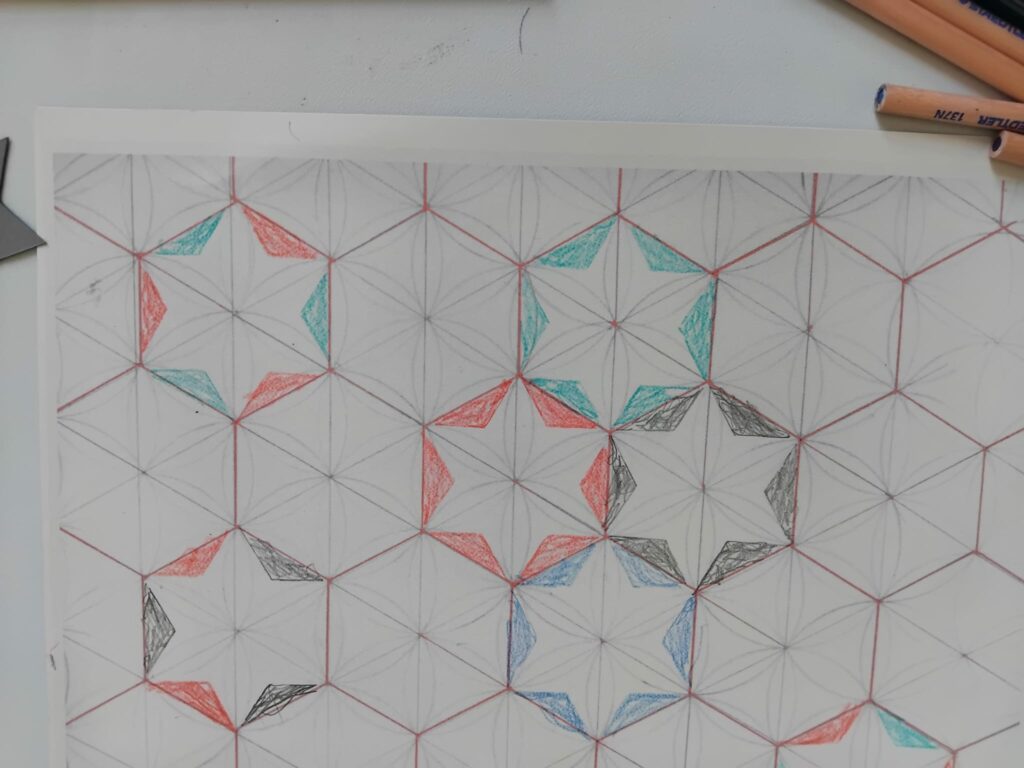
Museum – I took this opportunity to give a brief talk to the group giving a summary of everything that we had done up to this point, in order to keep the progress current in people’s minds. We then did some more work on the geometric artworks from the previous week, and the clients really became very very absorbed in this project. They didn’t want to leave at the end..!
Week 10 16/6/2026
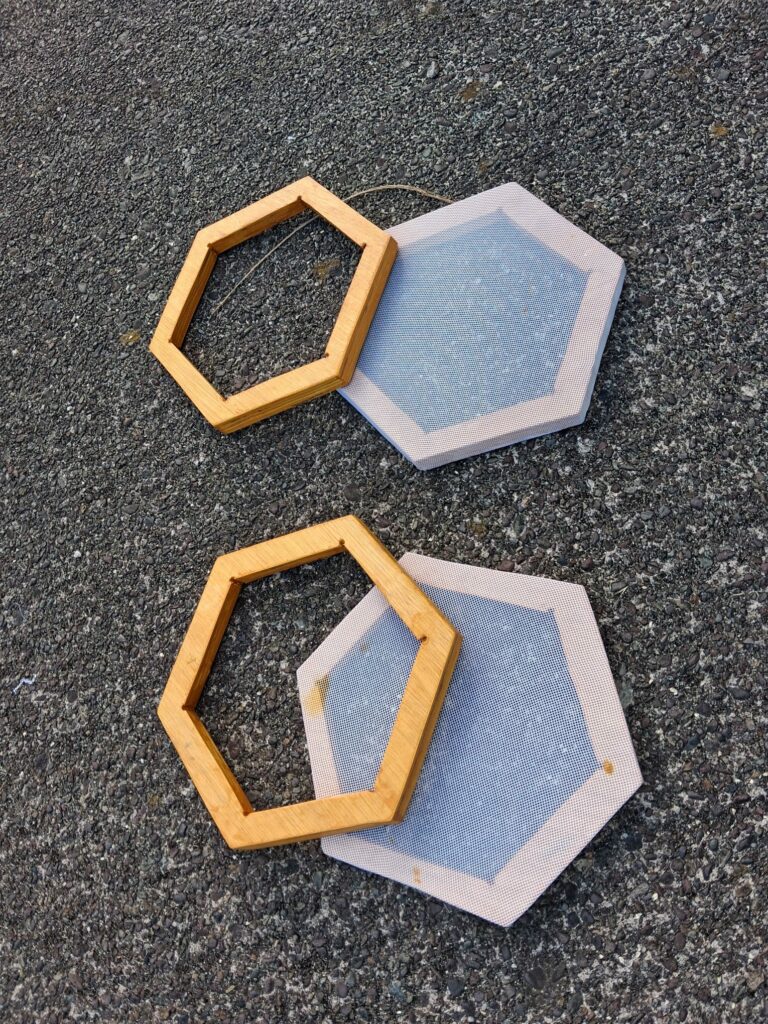
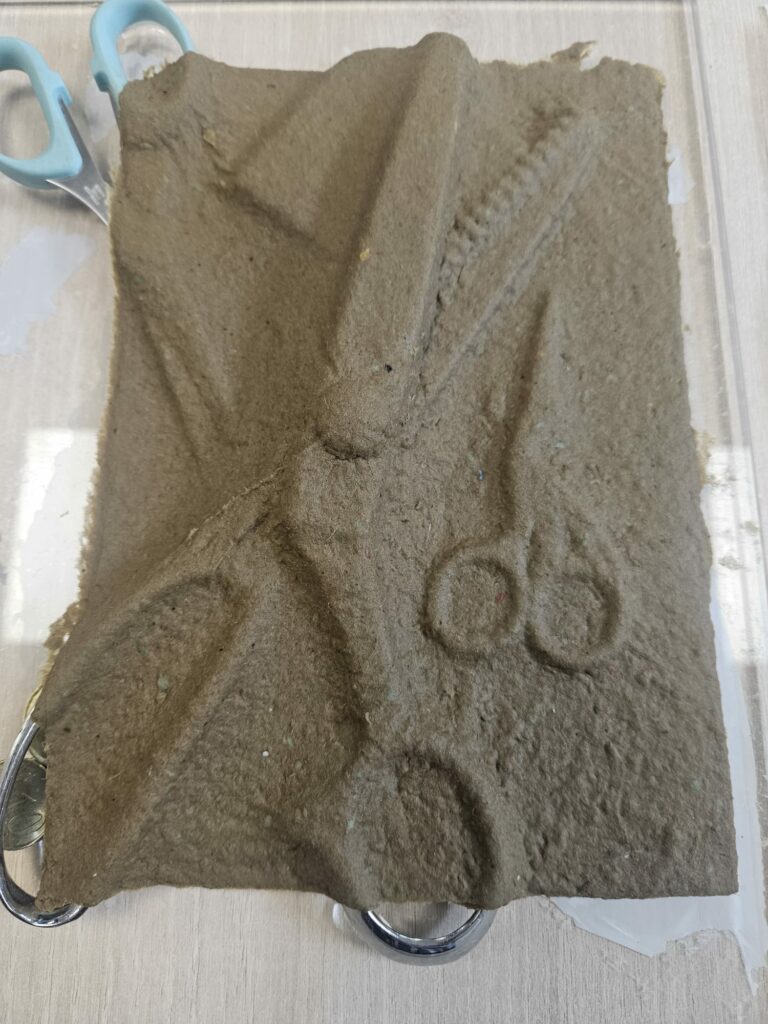
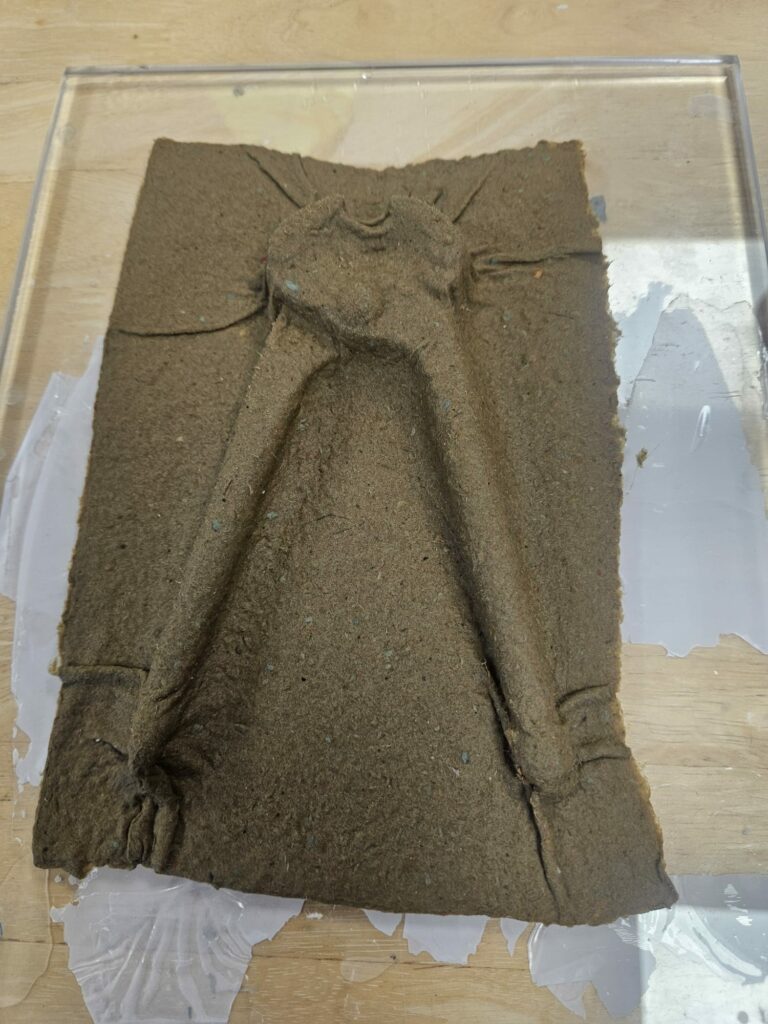
Back in Ballyphehane, the hexagonal collage sessions had been a good success, so I decided to make up a batch of hexagonal molds and deckles for the papermaking sessions. Now we could use everything we had already learned to make paper sheets which would tile together seamlessly. After previous sessions where we had cast objects with paper pulp, Niamh had the really good idea that the participants could perhaps use tools or items which they they would regularly use themselves, and we could cast them in order to encourage development of memory for each person.
Week 11 23/6/2026
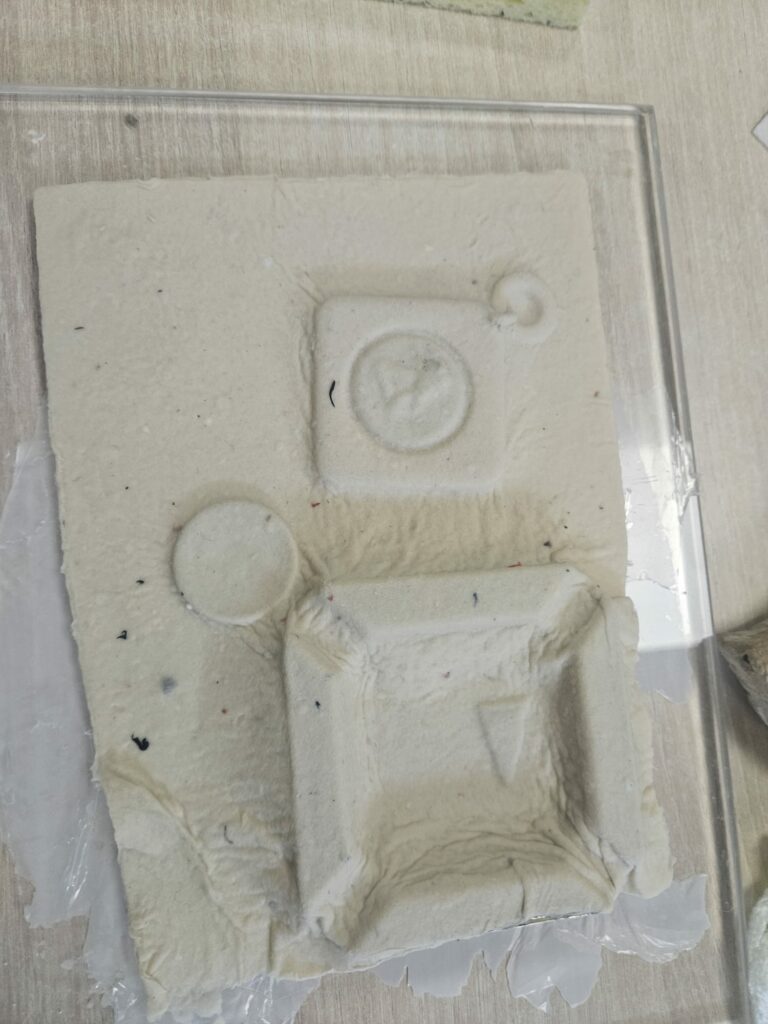
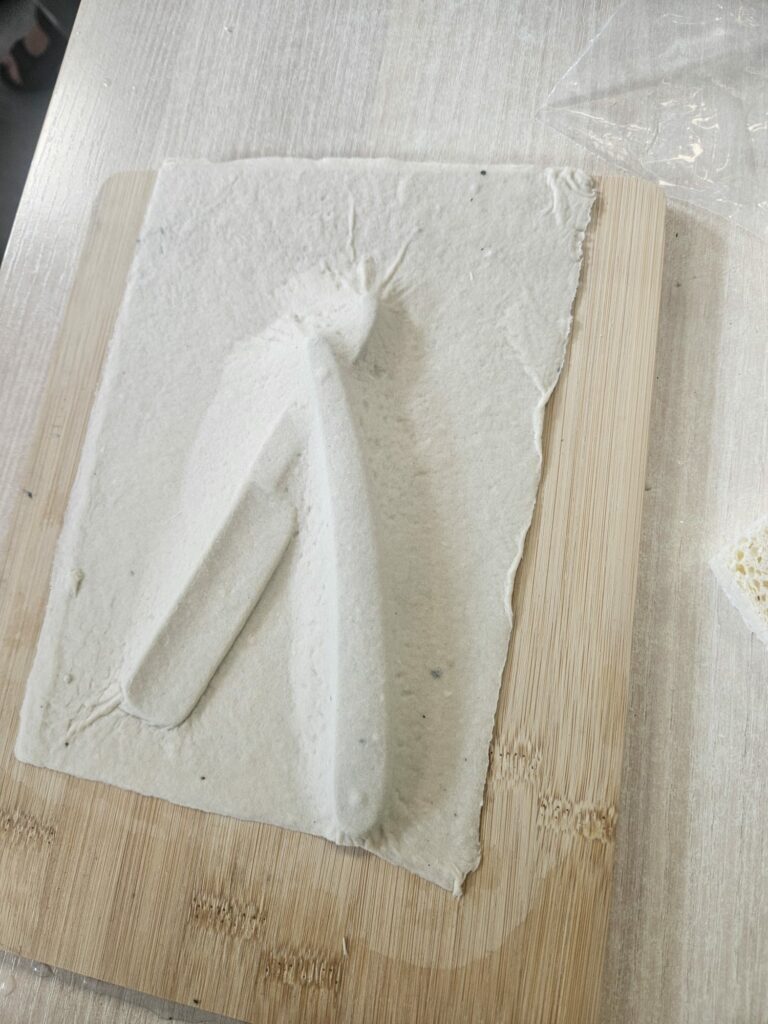
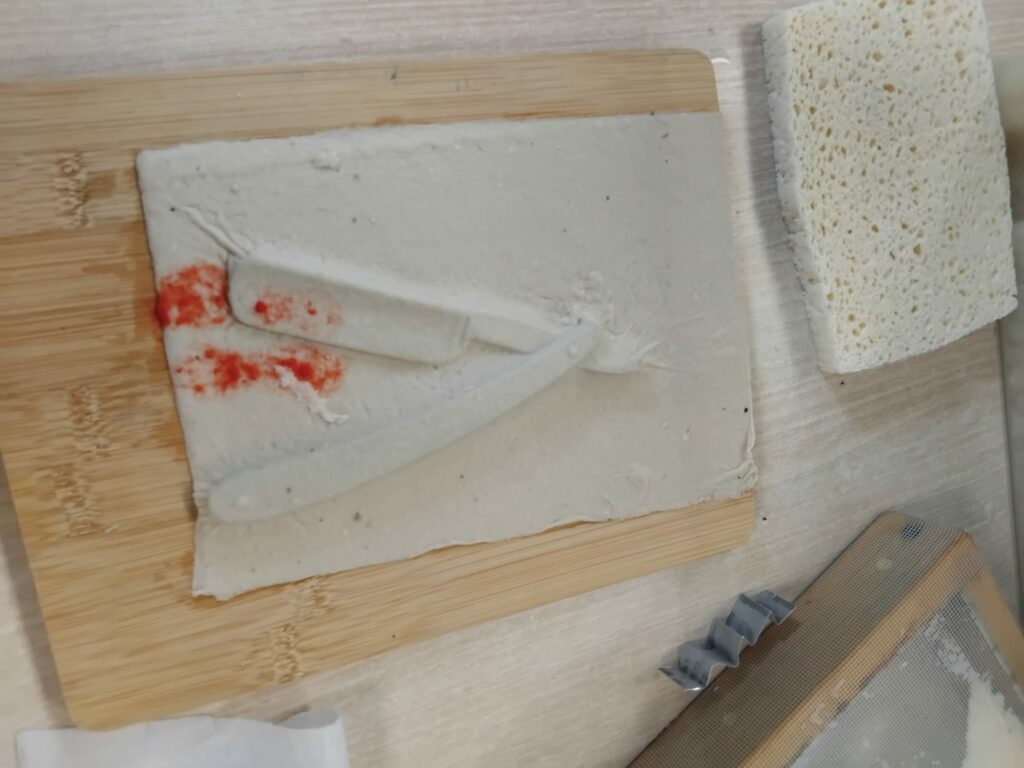
This week we continued with the paper making, we had the hexagonal molds and deckles which gave a little more variety to the sheets formed, and more members of the group brought in items to cast. Some had brought in multiple items, some of which were more suitable than others for casting. Some of the items were very high relief and even fully three dimensional forms. I demonstrated the technique of casting more complex forms to the group, which I think helped people to identify the kind of objects they could use.
Weel 12 30/6/2026
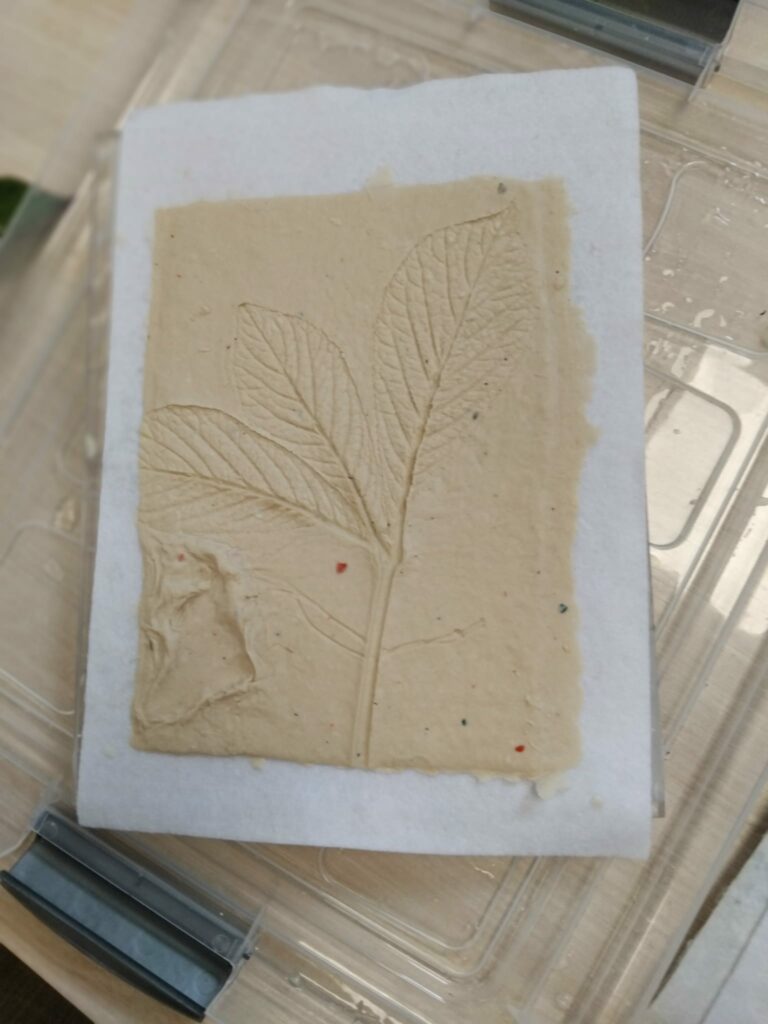
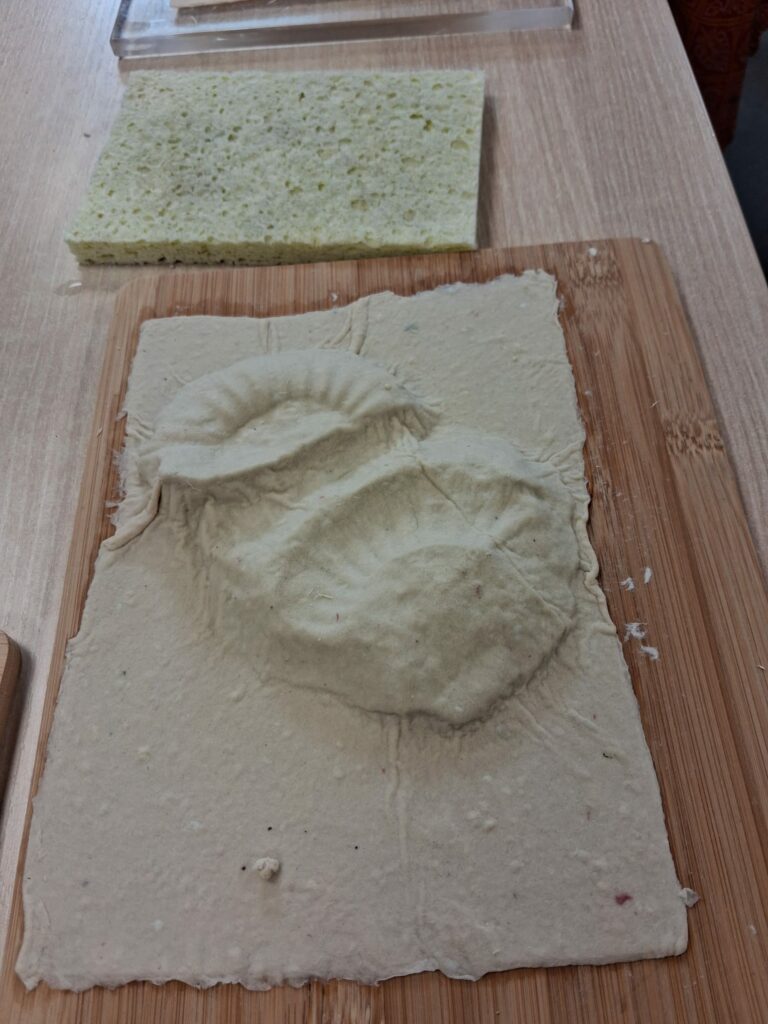
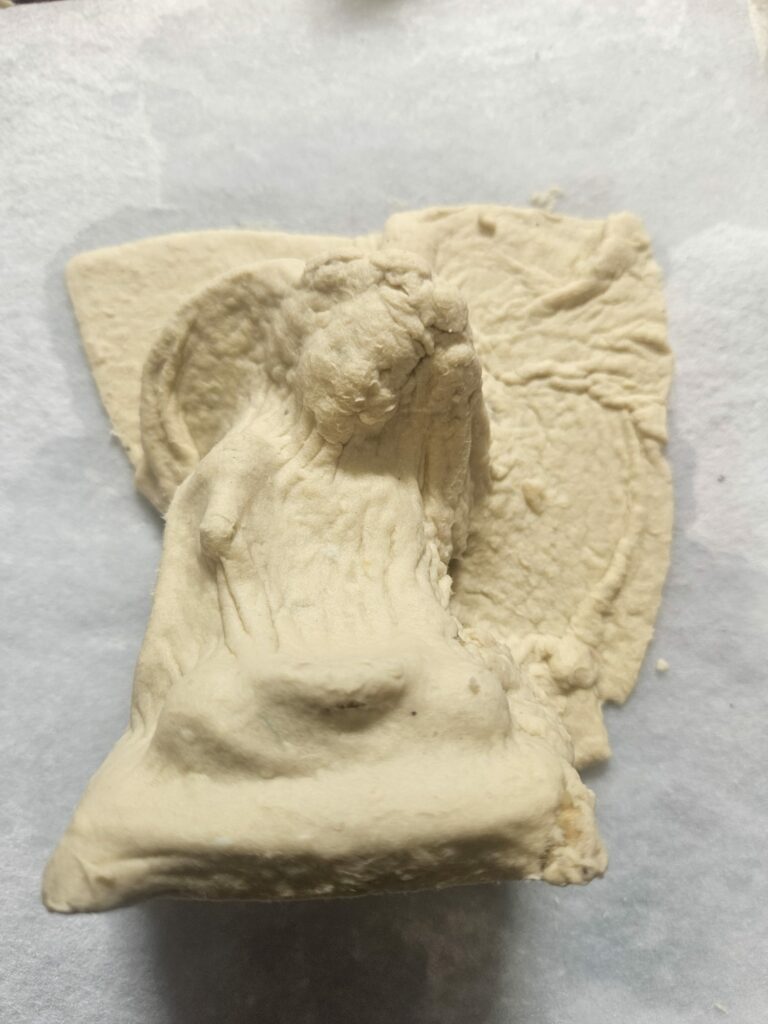
Again in the community centre, there was an even greater variety of objects to be cast,
